Skip to content

Turin's old town

Quadrilatero Romano: Turin's Roman old town on foot

Between Piazza Castello, Porta Palatina and the Consolata lies the oldest part of Turin. The streets still follow the grid of the Roman town of Augusta Taurinorum – with the cathedral and the Shroud, Baroque churches, lanes full of bars and Caffè Al Bicerin.

  • Roman street grid from the time of Augustus
  • Porta Palatina: one of the best-preserved Roman city gates
  • Cathedral with the Shroud of Turin and the Museo della Sindone
  • Caffè Al Bicerin on Piazza della Consolata since 1763

from€87.00per person

Book the old town walk
Rated 4.4 out of 54.4
27 reviews
Book via GetYourGuide
Porta Palatina, the Roman city gate of Turin
Foto: antonio filigno / Pexels

The Quadrilatero Romano at a glance

The Quadrilatero Romano is the historic heart of Turin. This is where the Roman colony of Augusta Taurinorum stood, founded in the time of Emperor Augustus, after 27 BC. Its rectangular ring of walls measured around 670 by 760 metres. Inside, straight streets divided the town into regular blocks, the insulae. Two main axes crossed, and there was a gate on each side of the wall.

You can still see this grid on any city map: the lanes between Piazza Castello and the Consolata almost always cross at right angles. According to MuseoTorino, Via Garibaldi still follows the exact line of the decumanus maximus, the Roman east–west axis.

What awaits you in the district:

  • Roman Turin: Porta Palatina, the Parco Archeologico and the remains of the Roman theatre.
  • Churches: the cathedral of San Giovanni Battista with the Shroud, the Santuario della Consolata, Santi Martiri, Corpus Domini, San Domenico and Sant’Agostino.
  • Museums: the Museo della Sindone, the Museo Diocesano with access to the bell tower, and the MAO, the museum of Asian art.
  • Squares and lanes: Piazza Palazzo di Città with the town hall, Via Garibaldi, Via Sant’Agostino and Via delle Orfane.
  • Food and drink: Caffè Al Bicerin, small bars for aperitivo and, right next door, the Porta Palazzo market.

The district starts right behind the Palazzo Reale. From Palazzo Madama on Piazza Castello to the cathedral it's only around 270 metres as the crow flies. So the Quadrilatero combines well with the Musei Reali or Palazzo Madama.

Porta Palatina and the Parco Archeologico

The Porta Palatina was the Roman north gate of the town. MuseoTorino calls it one of the best-preserved city gates from the beginning of the Common Era. It is the best-known Roman structure in Turin.

  • Two towers: the "Torri Palatine" are built of brick, 16-sided polygons on a square base. Their current crowning is not original; the towers have been repaired several times.
  • Four passages: two wide arches in the middle were for carts, two narrow ones at the sides for pedestrians.
  • Parco Archeologico: around the gate lies a green space where traces of the ancient town have been made visible. A good place for a break between the cathedral and the market.

A few steps further, between the cathedral and the Palazzo Reale, are the remains of the Roman theatre. After restoration, the archaeological area has been open again since 2021. The best view is from the "Archeologia a Torino" section in the basement of the Manica Nuova – it belongs to the Musei Reali and is included in the ticket.

Narrow lane in Turin's old town
Foto: Grigorii Shcheglov / Pexels

San Giovanni Battista Cathedral and the Shroud

Turin Cathedral stands at Via XX Settembre 87, right next to the Palazzo Reale. It was built from 1491 to 1498 on the site of three medieval churches, commissioned by Bishop Domenico della Rovere and designed by the Tuscan architect Meo del Caprina. According to Turismo Torino, it is the first Renaissance building in Turin.

Next to it stands the Sant’Andrea bell tower, completed in 1469 and raised by Filippo Juvarra in 1720. Behind the choir, Guarino Guarini built the Chapel of the Holy Shroud, the Cappella della Sindone, from 1668 to 1694.

Where is the Shroud?

The Shroud of Turin was kept in the Cappella della Sindone until 1993. Since then it has been kept in the cathedral. It is only shown to the public at rare exhibitions, the ostensions. So on a normal visit you won't see the cloth itself. Today you visit Guarini's chapel with its dome via the Musei Reali.

Museo Diocesano and bell tower

The lower church of the cathedral houses the Museo Diocesano, with sacred art, the cathedral's first baptismal font from the late 15th century and the remains of three early Christian churches. From here you can also climb the bell tower, with views over the rooftops of the old town. It is open on Mondays and Fridays to Sundays from 10:00 to 18:00, and closed Tuesday to Thursday. Standard admission is €10.00, reduced €7.00. Times may change – check them before your visit.

San Giovanni Battista Cathedral with its bell tower in Turin
Foto: ANMA PHOTOGRAPHY / Pexels

Museo della Sindone: the Shroud museum

If you want to know more about the Shroud, head to the Museo della Sindone at Via San Domenico 28. It is in the crypt of the church of SS. Sudario in the western part of the district. The museum presents research on the Shroud from the 16th century to the present day – from historical documents to scientific investigations.

  • Opening hours: daily 15:00 to 18:00; the ticket office closes one hour earlier.
  • Official admission: €8.00 standard, €6.00 reduced (over-65s, teachers, groups, students under 26), €3.00 for children aged 6 to 12.
  • Free: children under 6, people with disabilities and holders of the Torino + Piemonte Card.

The museum only opens in the afternoon, so plan it for the end of your walk, for example before a Bicerin at the Consolata.

Santuario della Consolata and Caffè Al Bicerin

On the western edge of the district, around 600 metres from the cathedral as the crow flies, is the Santuario della Consolata. The church is closely linked to the veneration of the Virgin Mary. It was originally dedicated to Saint Andrew and already existed in the 10th century. The bell tower and the lower chapel of the Madonna delle Grazie survive from the Middle Ages.

In 1678 Guarino Guarini extended the church, and in 1729 Filippo Juvarra added the oval presbytery and the lavish high altar. The neoclassical façade dates from 1860. The Consolata is open daily from 8:00 to 19:30. Please be considerate during services.

Caffè Al Bicerin

Opposite the entrance to the Consolata, at Piazza della Consolata 5, is Caffè Al Bicerin. It has been around since 1763 and is one of the historic cafés recommended by Turismo Torino. This is where you order Turin's signature drink, the Bicerin: coffee, chocolate and milk cream, layered in a small glass. Since 2001 it has been recognised as a traditional drink of Piedmont.

The café is open daily from 9:00 to 19:15 and closed on Wednesdays. Read more about Bicerin, gianduiotti and the other historic cafés on our page chocolate, Bicerin and historic cafés.

Squares, streets and churches in the district

Between the major sights, it's worth wandering through the lanes. All these places are in the Quadrilatero or right on its edge.

Piazza Palazzo di Città

The square in front of the town hall used to be called Piazza delle Erbe, after the herb market. In 1756 Benedetto Alfieri redesigned it with arcades. The town hall itself, the Palazzo Civico, was built from 1659 to 1665 to plans by Lanfranchi. In the middle stands the monument to the "Conte Verde", a 14th-century Count of Savoy, by Pelagio Palagi (1853).
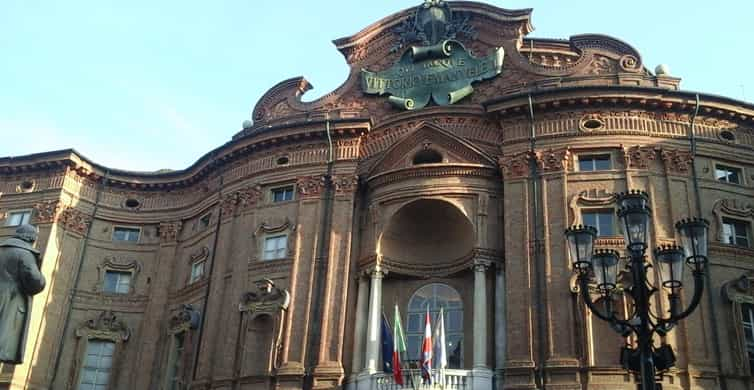
Via Garibaldi

The pedestrian street between Piazza Castello and Piazza Statuto is 963 metres long and follows the Roman decumanus maximus. At number 25 stands the church of Santi Martiri.

Santi Martiri

Built in 1577, the first church the House of Savoy commissioned in Turin and the oldest Jesuit seat in the city. Juvarra designed the high altar in 1730. Open Tuesday to Friday 16:00–19:00 and Sunday 16:00–19:30.

Basilica Corpus Domini

The church on Piazza Corpus Domini, a few steps from the town hall, commemorates the Eucharistic miracle of 6 June 1453. The current building dates from the 17th century.

Via Sant’Agostino

One of the district's typical lanes, with bars and restaurants. On the corner with Via Santa Chiara stands the church of Sant’Agostino: its origins go back to the 9th century, and the current building was built from 1551 to 1582 and consecrated in 1643.

Via delle Orfane

This narrow street runs through the western Quadrilatero towards the Consolata. Here stands the Palazzo Falletti di Barolo, the town palace of the Marchesi di Barolo.

San Domenico

One of the few medieval buildings in Turin's old town, at Via San Domenico 21. The church has always belonged to the Dominicans and was the seat of the Inquisition.

MAO – Asian art

The Museo d’Arte Orientale in Palazzo Mazzonis, Via San Domenico 11, shows art from Asia. Open Tuesday to Sunday, closed on Mondays. Official admission €10.00, free with the Torino Card.

A walk through the Quadrilatero Romano

This route links the district's most important places. It starts on Piazza Castello and ends on Via Garibaldi. Allow half a day including visits and a coffee break. Note the opening hours: the Museo della Sindone only opens at 15:00, and Caffè Al Bicerin is closed on Wednesdays.

  1. Piazza Castello

    Start at Palazzo Madama in the middle of Piazza Castello. Walk north past the Palazzo Reale. From Palazzo Madama to the cathedral it's around 270 metres as the crow flies.

  2. San Giovanni Battista Cathedral

    Take a look at the Renaissance façade and the interior of the cathedral, where the Shroud is kept. If the Museo Diocesano is open, climb the bell tower from there.

  3. Teatro Romano and Porta Palatina

    Between the cathedral and the Palazzo Reale lie the remains of the Roman theatre. Just to the north you reach the Porta Palatina with its two towers and the Parco Archeologico.

  4. Detour: Porta Palazzo

    Behind the Porta Palatina, Piazza della Repubblica opens up with the Porta Palazzo market. Everything about market days and stalls is on our page about the Porta Palazzo market.

  5. Via San Domenico

    Back in the district, head west to Via San Domenico. Here you'll find the medieval church of San Domenico, the MAO in Palazzo Mazzonis and, from 15:00, the Museo della Sindone.

  6. Consolata and Al Bicerin

    Through the lanes of the western Quadrilatero you reach Piazza della Consolata. Visit the Santuario and have a Bicerin opposite at Caffè Al Bicerin.

  7. Via delle Orfane and Via Sant’Agostino

    On the way back south, walk along Via delle Orfane with Palazzo Barolo and Via Sant’Agostino with its church and small eateries.

  8. Piazza Palazzo di Città and Via Garibaldi

    Finally you reach the arcades of Piazza Palazzo di Città with the town hall and the Conte Verde monument, plus the Basilica Corpus Domini. From here Via Garibaldi leads back to Piazza Castello – passing the church of Santi Martiri on the way.

Opening hours and admission at a glance

Times for the district's main sights, as of October 2026. Churches may differ during services and on public holidays.

PlaceOpening hoursOfficial admission
San Giovanni Battista CathedralMon–Fri 10:00–12:30 and 16:00–19:00, Sat–Sun 9:00–13:00 and 15:00–19:00Church
Museo Diocesano + bell towerMon, Fri–Sun 10:00–18:00, closed Tue–Thu€10.00, reduced €7.00
Museo della Sindonedaily 15:00–18:00€8.00, reduced €6.00, free with the Torino Card
Santuario della Consolatadaily 8:00–19:30Church
Santi MartiriTue–Fri 16:00–19:00, Sun 16:00–19:30, closed Mon and SatChurch
MAO – Museo d’Arte OrientaleTue–Sun, closed Mondays€10.00, reduced €8.00, free with the Torino Card
Caffè Al Bicerindaily 9:00–19:15, closed Wednesdays–

Sources: Turismo Torino, sindone.it, Abbonamento Musei, maotorino.it, bicerin.it. Museum ticket offices usually close one hour before closing time.

Evenings in the Quadrilatero: aperitivo and lanes

By day the Quadrilatero is a district of churches and museums; in the evening the lanes fill up. Around the Porta Palatina, Via Sant’Agostino and the small squares inside the district, bars, wine bars and restaurants line up one after another. Turismo Torino explicitly describes the area around the Porta Palatina as a place for aperitivo – a custom that, according to Turismo Torino, originated in Turin around two centuries ago.

A glass of vermouth or wine with small bites in the early evening, before going on to dinner, is typical. How it works in Turin and what to order is explained on our pages aperitivo in Turin and vermouth in Turin.

We deliberately don't recommend individual venues here: bars and restaurants in the Quadrilatero change often. See what you like when you're there – there's plenty of choice.

Guided tours of the old town

The Quadrilatero is easy to explore on your own. With a guide you'll learn more about the Romans, the House of Savoy and the stories behind the façades. These tours go through the district or past its most important sights.

Classic old town walk

Classic old town walk

4.4 · 27 reviews

⏱ 3 hours🗣 English, Greek, Italian, Polish

Small group of up to 10 people: Palazzo Madama, Palazzo Reale, the cathedral with the Shroud, Piazza San Carlo, Piazza Carignano and the Quadrilatero Romano, plus espresso and gianduiotti. Meeting point on Piazza Castello. Languages: English, Greek, Italian, Polish.

from €87.00

Details & booking
Old town & Porta Palatina

Old town & Porta Palatina

4.9 · 41 reviews

⏱ 2 hours🗣 English, French, Spanish, Italian

Two hours with a maximum of 9 people: Piazza San Carlo, Porta Palatina, the cathedral, Piazza Castello with Palazzo Madama and Palazzo Reale, Piazza Carignano and the Mole Antonelliana. Meeting point at the equestrian statue on Piazza San Carlo. Languages: English, Spanish, French, Italian.

from €72.00

Details & booking
City tour with chocolate

City tour with chocolate

5.0 · 1 reviews

⏱ 2.5 hours🗣 English, Italian, French, German, Spanish, Japanese and others

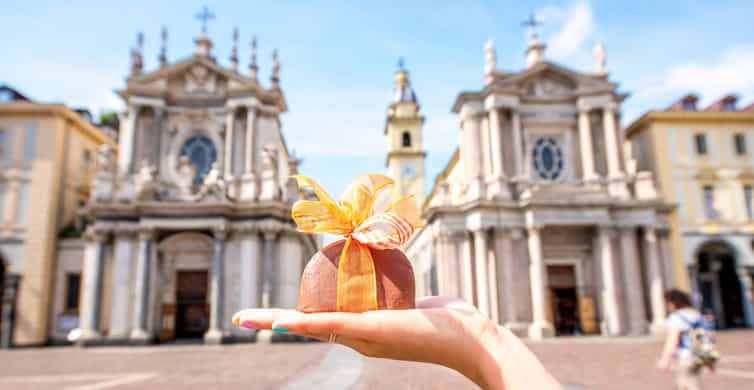
A walk via Piazza Castello, Palazzo Reale, the cathedral, Porte Palatine and Palazzo Madama, with a gianduiotto tasting at a confectioner's. Meeting point on Piazza San Carlo, also available as a private tour. Languages: English, Italian, German, French, Spanish, Portuguese, Russian, Japanese, Chinese.

from €138.00

Details & booking
Torino Magica & cathedral

Torino Magica & cathedral

4.6 · 1,678 reviews

⏱ 2 hours – 2.5 hours🗣 English, Italian, French, German, Japanese, Spanish

This tour of Turin's legends of white and black magic starts on Piazza Statuto, at the western end of Via Garibaldi, and takes in the cathedral façade among other places. Languages: English, Italian, German, French, Spanish, Japanese.

from €55.00

Details & booking
Electric bus with audio guide

Electric bus with audio guide

3.9 · 116 reviews

⏱ 50 minutes🗣 English, Chinese, French, German, Italian, Russian and others

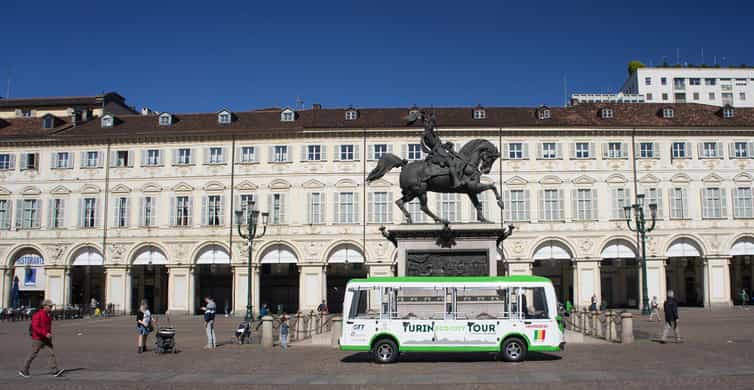
The green electric bus of the "Turin Eco City Tour" is allowed into restricted traffic zones and passes the cathedral, the Porta Palatina, Porta Palazzo and the town hall, among other sights. Departure from Piazza Castello – good if you don't want to walk too much.

from €15.00

Details & booking

According to the providers, the chocolate city tour can be cancelled free of charge up to 2 days in advance, the other tours up to 24 hours in advance.

In the evening and for food lovers

These tours start in or near the district, or fit well with a day in the Quadrilatero.

Turin Noir from the cathedral

Turin Noir from the cathedral

4.7 · 213 reviews

⏱ 2.5 hours🗣 Italian

An evening walk about plague, crime and witchcraft with exclusive openings, including the church of the Misericordia and a bell tower. Meeting point in front of the cathedral, Via XX Settembre 87. The tour is in Italian only.

from €32.00

Details & booking
Food tour with Bicerin

Food tour with Bicerin

4.8 · 23 reviews

⏱ 2 hours🗣 English, Italian

Two hours through the city centre with gianduiotto, Cri-Cri, zabaione, gelato and Bicerin or vermouth in a historic café. The tour starts south of Piazza Castello, not in the Quadrilatero. Languages: Italian, English.

from €39.00

Details & booking
Underground Turin

Underground Turin

4.7 · 662 reviews

⏱ 2.5 hours – 3 hours🗣 English, Italian, German, Spanish, French, Japanese

A guided tour through 18th-century tunnels and Second World War air-raid shelters. Meeting point at the Museo Pietro Micca on Via Guicciardini, west of the district. Admission tickets are included.

from €55.00

Details & booking

According to the providers, all three tours can be cancelled free of charge up to 24 hours in advance.

With the Torino Card and Royal Pass

With the Torino + Piemonte Card, entry to the Museo della Sindone and the MAO is free, as is entry to the Musei Reali with the Chapel of the Holy Shroud and the remains of the Roman theatre. The Royal Pass also includes the Musei Reali, but not the Museo della Sindone or the MAO. Which pass suits your trip is shown in our Torino Card vs Royal Pass comparison.

More about the Torino Card
Torino + Piemonte Card

Tips for your visit

  • Right time of day: mornings suit the cathedral, the Porta Palatina and the Porta Palazzo market. The Museo della Sindone only opens at 15:00, and the bars fill up in the early evening.
  • Mind Wednesdays: Caffè Al Bicerin is closed on Wednesdays. On Mondays the MAO and the church of Santi Martiri are closed.
  • Churches: the cathedral and the Consolata are active churches. Don't walk around during Mass, and cover your shoulders and knees.
  • Combine: the district is right next to the Musei Reali. With our routes for one day or two days in Turin you can plan everything together.
  • Other districts: if you enjoy going out in the Quadrilatero, take a look at San Salvario too, another nightlife district in the city centre.

Quadrilatero Romano: FAQ

Back to top