Juvarra's high altar
Juvarra's ornate high altar stands in the oval presbytery. Two adoring angels in white marble by Carlo Antonio Tantardini frame the image of the miraculous Madonna – the goal of the pilgrims.

Turin's Marian sanctuary
The Consolata is the church many people in Turin hold closest to their hearts: a Baroque building by Guarini and Juvarra beside a medieval bell tower, full of painted thank-you pictures. Opposite, the Caffè Al Bicerin has been serving the famous layered drink since 1763.
The Santuario della Consolata, officially the sanctuary of Maria Consolatrice, "the Consoler", is Turin's great Marian shrine. The Madonna della Consolata is the patron saint of the Archdiocese of Turin. For many locals, the church is more than a sight: this is where they light candles, attend Mass and, for centuries, have hung pictures as thanks for help in times of need.
The church stands on the western edge of the Quadrilatero Romano, the oldest part of the city. From the outside, three things stand out: the neoclassical portico, the dome and, next to it, the plain bell tower, which is much older than the rest of the church.
What to expect:
The church itself does not take long to see. Add a Bicerin and a stroll through the lanes, and it easily fills half a morning.
Originally, a church dedicated to Saint Andrew stood on this spot. According to Turismo Torino, it already existed in the 10th century. Two parts survive from the Middle Ages: the bell tower and the lower chapel of the Madonna delle Grazie. The tower is Romanesque and considerably older than today's church.
Devotion to the Consolata goes back to a legend. In 1104, a blind man from Briançon is said to have found a lost image of the Virgin in the ruins of the church and regained his sight. According to tradition, this happened on 20 June. Ever since, Turin has celebrated the Feast of the Consolata with a procession on that day.
In 1678, the church was completely remodelled and enlarged to plans by Guarino Guarini. In Turin, Guarini also created the Chapel of the Holy Shroud and the church of San Lorenzo. The new sanctuary was consecrated in 1704.
In 1706, French troops besieged Turin. After the siege ended, the city turned to the Consolata: in 1714, the city council declared her Turin's special protector. In 1729, Filippo Juvarra, the architect of the Basilica di Superga, added the oval presbytery. The ornate high altar is also his work.
The neoclassical façade with its portico was built in 1860. From 1899 to 1904, the church was enlarged once more under Carlo Ceppi. This was the time of Giuseppe Allamano. He ran the sanctuary as rector for almost 50 years and founded the Consolata Missionaries in 1901. He was canonised on 20 October 2024.
The key milestones at a glance:
| Year | Event |
|---|---|
| 10th century | The church of Sant’Andrea already exists |
| Middle Ages | Bell tower and lower chapel of the Madonna delle Grazie |
| 1104 | Legend: a blind man finds the image of the Virgin and is healed |
| 1678 | Remodelling to plans by Guarino Guarini |
| 1704 | Consecration of the new sanctuary |
| 1714 | The city council declares the Consolata protector of Turin |
| 1729 | Oval presbytery by Filippo Juvarra |
| 1835 | Cholera epidemic; afterwards a column with a statue of the Virgin on the piazza |
| 1860 | Neoclassical façade |
| 1899–1904 | Final enlargement under Carlo Ceppi |
| 2024 | Canonisation of the long-serving rector Giuseppe Allamano |
Sources: Turismo Torino, Piemonte Italia, MuseoTorino, Missionari della Consolata, Vatican News.
At first glance the interior feels rambling: Guarini's Baroque building, Juvarra's presbytery and the later extensions flow into one another. These spots are worth your time.
Juvarra's ornate high altar stands in the oval presbytery. Two adoring angels in white marble by Carlo Antonio Tantardini frame the image of the miraculous Madonna – the goal of the pilgrims.
Next to the sacristy hang more than 2,000 hand-painted votive pictures. The faithful had them painted as thanks to the Consolata after accidents, illness or war – including pictures from the First World War. Naive folk art that tells you more about life in Turin than many a museum.
The lower chapel dates from the medieval church. It is dedicated to the Madonna delle Grazie and is a quiet spot away from the main space.
Look up: the tall, painted dome and the interlocking spaces show how Guarini worked with light and space.
You see the tower from outside, next to the church. It was already part of the medieval church of Sant’Andrea and is the oldest part of the sanctuary.
20 June is the most important day of the Consolata's year. The feast commemorates the legend of 1104 and is one of Turin's most popular festivals. The next feast falls on Sunday 20 June 2027.
During the procession, bus and tram lines in the old town are diverted. The Archdiocese of Turin publishes the programme and times shortly before the feast each year on diocesi.torino.it.
The Consolata is a working pilgrimage church. You can visit it every day without a ticket.
| Info | Details |
|---|---|
| Opening hours | daily 8:00–19:30 (according to Turismo Torino) |
| Admission | no ticket needed |
| Mass | several times a day; current times on the notice board and on laconsolata.org |
| Address | Piazza della Consolata, 10122 Torino |
| Phone | +39 011 483 6111 |
| Website | laconsolata.org |
As of October 2026. You cannot walk around during services – plan your visit between Masses.
The Consolata is not a museum but a place of prayer. Many visitors come to pray, go to confession or light a candle. Follow these rules and you will be on the safe side:
The sanctuary stands on the small Piazza della Consolata in the north-west of the Quadrilatero Romano. Vittorio Amedeo II had the square laid out in 1715, demolishing a bastion of the old city walls to make room for it.
On the square stands a granite column with a marble statue of the Madonna. The city erected it in thanks because Turin had been spared by the cholera epidemic of 1835.
You can find bus and tram connections on our page about public transport in Turin. If you want to fit the Consolata into a day's route, you will find suggestions under Turin in one day and Turin in two days.
Right opposite the entrance, at Piazza della Consolata 5, is the Caffè Al Bicerin. Giuseppe Dentis founded it in 1763. The current building dates from 1856. Inside, round white marble tables stand between wood-panelled walls with mirrors.
The café gave the Bicerin its name: coffee, chocolate and cream, layered in a small glass. In Piedmontese, the word means "small glass". Since 2001, the Bicerin has been officially recognised as a traditional drink of Piedmont.
Opening hours: according to the café, daily 9:00–19:15, closed on Wednesdays (with occasional exceptions). So if you want a Bicerin straight after visiting the Consolata, do not plan your visit for a Wednesday.
Read more about the Bicerin, Gianduiotti and the other historic cafés on our page Chocolate, Bicerin and historic cafés.
The big booking platforms do not offer a tour of the Consolata alone. Of the tours we checked, only one goes into the sanctuary according to its programme. The other two make a good match: a walk through the old town and a chocolate tour with Bicerin.
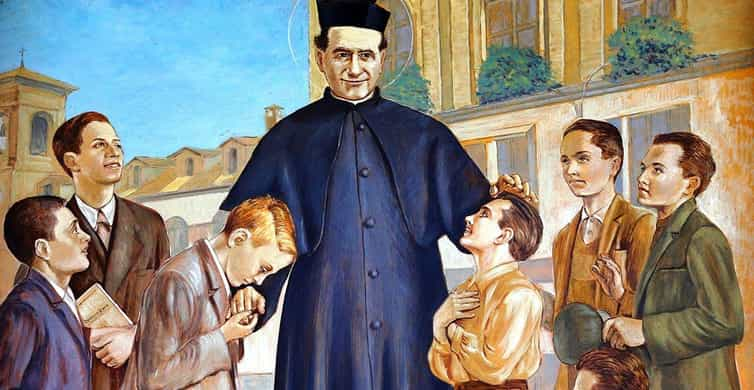
Private 2.5-hour tour following in the footsteps of the "social saints": the Museo Casa Don Bosco in Valdocco, the Basilica of Maria Ausiliatrice, places linked to Cottolengo and Cafasso, and the Santuario della Consolata. It ends at the Palazzo Falletti di Barolo. Admission fees are included. Available in Italian, English, Spanish, French and Portuguese.
from €172.00
Details & booking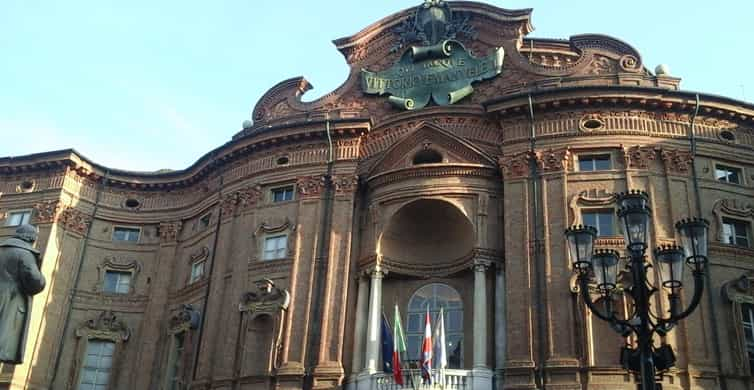
Classic walk through the historic centre with Palazzo Madama, the Royal Palace (Palazzo Reale), the cathedral, Piazza San Carlo and the Quadrilatero Romano, including espresso and Gianduiotti. The Consolata is not part of the programme – but it is on the edge of the district. In English, Greek, Italian and Polish.
from €87.00
Details & booking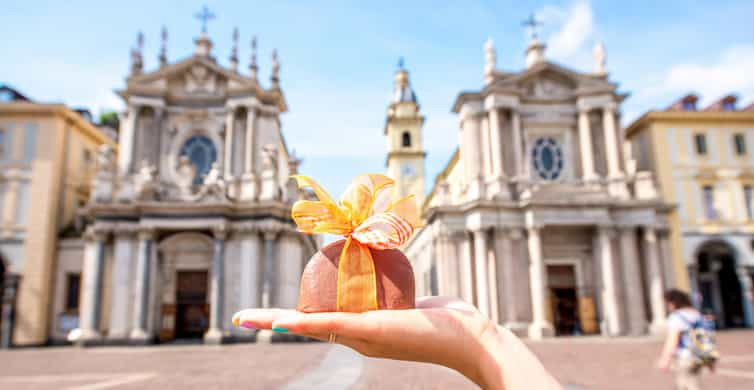
Private two-hour family tour with a chocolate tasting and a Bicerin or another hot drink. It starts at Piazza Carignano, with stops at Piazza San Carlo and Piazza Castello. The Caffè Al Bicerin is not explicitly included. In English and Italian.
from €175.00
Details & bookingAccording to the providers, all three can be cancelled free of charge up to 24 hours in advance. The provider of the Don Bosco tour points out that shorts, short skirts and sleeveless tops are not welcome in the churches.
The underground spaces of the Consolata are normally closed. You can get in on the "Secret Underground Turin" tour by the Turin operator Somewhere, which Turismo Torino lists in its programme. It links three places: a Second World War air-raid shelter, the spaces beneath the Consolata and the old ice cellars under the Mercato Centrale.
The Consolata itself is free to enter. But you save with the Torino + Piemonte Card in the museums around it: entry is free at the Museo della Sindone on the Shroud of Turin and at the MAO, the Museum of Oriental Art, as well as at the nearby Musei Reali. On the "Secret Underground Turin" tour, you pay less with the card.
From the Consolata it is just a few minutes to the cathedral and the Shroud, the Porta Palatina and the lanes with their bars for aperitivo. Our walk through the Roman quarter links all the stops.
Nothing. The Consolata is a working pilgrimage church; you do not need a ticket. Only the "Secret Underground Turin" tour of the underground spaces charges admission.
According to Turismo Torino, daily 8:00–19:30. You cannot walk around during Mass. Current Mass times are on the notice board at the church and on laconsolata.org.
Every year on 20 June. In the evening, a large procession carries the silver statue of the Consolata through the old town. In 2027 the feast falls on a Sunday.
The church grew over centuries. The bell tower dates from the Middle Ages. In 1678 Guarino Guarini remodelled the church, and in 1729 Filippo Juvarra added the oval presbytery and the high altar. The façade was built in 1860, and the final extensions from 1899 to 1904 under Carlo Ceppi.
Painted thank-you pictures from believers who felt the Consolata had saved them from accidents, illness or war. More than 2,000 of these pictures hang next to the sacristy.
Your shoulders and knees should be covered. Shorts, short skirts and sleeveless tops are not welcome in Italian churches.
Right opposite the church at Piazza della Consolata 5. According to the café, daily 9:00–19:15, closed on Wednesdays. More on our page Chocolate, Bicerin and historic cafés.
The big platforms do not offer a tour of the Consolata alone. The private "Don Bosco & Turin's saints" tour includes the sanctuary. You can see the underground spaces on "Secret Underground Turin", on Sundays with booking.
It is around 800 metres as the crow flies from Piazza Castello, around 600 metres from the cathedral and around 300 metres from Porta Palazzo. The way leads through the lanes of the Quadrilatero Romano.
The church is free to enter anyway. The Torino + Piemonte Card pays off for the nearby museums, such as the Museo della Sindone and the Musei Reali, and gives you a discount on "Secret Underground Turin".