Vitello tonnato
Slow-cooked veal, thinly sliced, with a creamy sauce of tuna, egg yolk, anchovies and capers. In dialect also "vitel tonné". Turismo Torino calls it a classic starter.

Typically Turin
Agnolotti del plin, vitello tonnato, bagna càuda and bonèt: here you will find the typical dishes of Turin and Piedmont, sorted by course – with their origins, protected status and the best time of year.
from€70.84per person
Food tour with vitello tonnato
Piedmontese cooking is a cuisine of antipasti, egg pasta and slow-braised dishes. Many classics come from rural tradition, such as agnolotti or bagna càuda. Italy's official tourism portal mentions French and Ligurian influences.
A meal typically has several courses: antipasti (often several small starters), primi (pasta, gnocchi, risotto), secondi (meat) and dolci. Add cheese, wine and – in autumn – the white truffle from Alba.
Since December 2025, Italian cuisine has been on the UNESCO list of Intangible Cultural Heritage. For the occasion, Turismo Torino presents exactly the dishes you will find below.
Many specialities are on the official list of traditional food products of Piedmont (PAT). This is not an EU label but a regional register of products made using traditional methods. Products with DOP (Protected Designation of Origin), IGP (Protected Geographical Indication) and wines with DOCG status are more strictly protected.
Piedmont is especially rich in starters. In Turin they often come as a selection of several small plates.
Slow-cooked veal, thinly sliced, with a creamy sauce of tuna, egg yolk, anchovies and capers. In dialect also "vitel tonné". Turismo Torino calls it a classic starter.
Raw beef, finely chopped by hand with a knife ("battuta al coltello") and dressed with olive oil, salt and lemon. It is made with meat from the Piedmontese breed of cattle, known locally as "Fassona".
A hot sauce of garlic, anchovies and oil, into which you dip raw and cooked vegetables. Turismo Torino calls it an old peasant recipe. It is on Piedmont's PAT list (as "Bagna caoda").
Season: seasonal vegetables; the highlight is Bagna Cauda Day in November (see the calendar below).
Anchovies "al verde", i.e. in green sauce. Also typical of Turin are dishes "in carpione": fried meat, fish or vegetables marinated in a vinegar-based liquid.
In Piedmont, the first course is almost all about fresh egg pasta.
Agnolotti del plin are small filled pasta parcels – according to Turismo Torino, "the first course par excellence" of Piedmontese cuisine. They are usually filled with meat and roast. "Plin" means pinch: the dough is pressed together between thumb and forefinger, which creates the typical shape. They are served with roast-meat gravy ("sugo d’arrosto") or with butter and sage. Both "Agnolotti" and "Plin" are on Piedmont's PAT list.
Tajarin are very thin, long ribbon noodles. Their deep yellow colour comes from the many egg yolks in the dough. They are classically served with meat sauce or with butter – and from October to January with shaved white truffle from Alba. Tajarin are on the PAT list too.
You will also find gnocchi and risotto on Turin menus. If you want to make the pasta yourself, you can learn agnolotti and tajarin at cooking classes in Turin and in the Langhe (see below and our page cooking classes in Turin).

The main course is all about meat. Since 2017, beef from the Piedmontese breed has been an EU Protected Geographical Indication (IGP) as "Vitelloni Piemontesi della coscia".
Beef marinated for a long time in Barolo wine with spices and herbs, then slowly braised. One of the region's best-known dishes. More about the wine on our page Langhe & Barolo.
Various cuts of boiled beef and pork, served with sauces such as the green "bagnet verd" (salsa verde) and the red "bagnet rosso".
This "mixed fry" is savoury and sweet at once: meat and offal such as liver and sweetbreads, veal, vegetables – plus small sweet morsels and fruit. Turismo Torino calls it a rich, traditional dish.
These thin breadsticks come from Turin. Turismo Torino calls them "un’invenzione tutta torinese" – an invention that is Turin through and through.
There are two classic types, both on Piedmont's PAT list:
We deliberately do not give an exact year or inventor: the often-told story of the court baker in the 17th century has only come down to us as a legend. In Turin you can buy grissini at the bakery, and they are often served with aperitivo.
Turin is the city of chocolate – but Piedmont also has plenty to offer when it comes to spoon desserts.
Piedmont's best-known spoon dessert: a pudding with cocoa and amaretti biscuits, in dialect also "bunét". On the PAT list as "Bonet".
"Cooked cream": a set cream pudding. It is on Piedmont's PAT list as a traditional product.
This chocolate, shaped like an upturned boat and made from cocoa, sugar and hazelnuts, was created in Turin in 1865 in the workshop of Prochet Gay e C. on Piazza San Carlo. The Tonda Gentile hazelnut variety is a Protected Geographical Indication (IGP) as "Nocciola Piemonte".
Not a dessert, but not to be missed: coffee, chocolate and cream layered in a small glass. Officially a "traditional drink of Piedmont" since 2001, and also on the PAT list.
Turismo Torino calls the list of Piedmontese cheeses "endless" – from robiola and toma to the small tomini. Three varieties with Protected Designation of Origin (DOP) are worth knowing:
| Cheese | Protection | Milk | Origin | Ageing (min.) |
|---|---|---|---|---|
| Castelmagno | DOP (EU since 1996) | cow's milk, plus 5–20% sheep's and/or goat's milk | only the municipalities of Castelmagno, Pradleves and Monterosso Grana (province of Cuneo) | 2 months |
| Bra (tenero / duro) | DOP (EU since 1996) | cow's milk, up to 10% sheep's and/or goat's milk | province of Cuneo; ageing also in Villafranca Piemonte (province of Turin) | tenero 45 days, duro 180 days |
| Toma Piemontese | DOP (EU since 1996) | cow's milk only | the only DOP cheese from almost all of Piedmont, incl. the province of Turin | 15 or 60 days (depending on wheel weight) |
Information from the Province of Cuneo (natura.provincia.cuneo.it), as of 1 October 2026.
Piedmontese food goes with Piedmontese wine. The best-known reds are Barolo, Barbaresco, Barbera and Nebbiolo. Barolo is a DOCG wine made from 100% Nebbiolo and aged for at least 38 months, at least 18 of them in wooden barrels. If you want to see the vineyards for yourself, you will find tours from Turin on our page Langhe & Barolo.
A Turin original is vermouth: in 1786, Antonio Benedetto Carpano launched the first vermouth in Turin. "Vermouth di Torino" is now a protected geographical indication. History, brands and tastings: Vermouth in Turin.
According to the Piedmont Region, vermouth also brought with it the custom of the aperitif. In the early evening in Turin, your drink comes with small snacks – often with grissini. Where and how: Aperitivo in Turin.
The white truffle (Tuber magnatum Pico) is the most valuable truffle species and Piedmont's luxury product. It may be hunted from 1 October to 31 January. In season it is shaved over dishes such as tajarin with butter. The International White Truffle Fair in Alba runs from 10 October to 6 December 2026 – Alba can be reached directly by train from Turin.
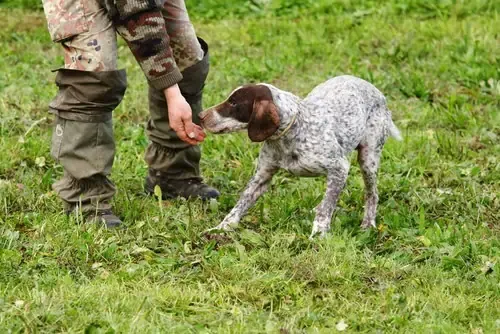
For some specialities, it pays to travel at the right time of year:
| Period | What | Where |
|---|---|---|
| 1 October to 31 January | White truffle hunting season – truffle over tajarin and carne cruda | all over Piedmont, centred on Alba |
| 10 October to 6 December 2026 | International White Truffle Fair with the World Market | Alba |
| 20–22 and 27–29 November 2026 | Bagna Cauda Day: bagna càuda at participating restaurants | Asti and restaurants across Piedmont |
| 10–14 February 2027 | CioccolaTò, Turin's chocolate festival | Turin, Piazza Vittorio Veneto |
Dates according to fieradeltartufo.org, bagnacaudaday.it, turismotorino.org and the Province of Cuneo's harvest calendar, as of 1 October 2026. At CioccolaTò, 10 February is for trade visitors only.
Which speciality is protected or officially listed, and how:
| Speciality | Status | Meaning |
|---|---|---|
| Castelmagno, Bra, Toma Piemontese | DOP | EU Protected Designation of Origin |
| Vitelloni Piemontesi della coscia (beef) | IGP | EU Protected Geographical Indication, since 2017 |
| Nocciola Piemonte (hazelnut) | IGP | Protected Geographical Indication |
| Barolo | DOCG | highest tier of Italian wine designations |
| Vermouth di Torino | IG | geographical indication for spirits/aromatised wines |
| Agnolotti, Plin, Tajarin, Grissino stirato, Rubatà, Bagna caoda, Bonet, Panna cotta, Giandujotto, Bicerin | PAT | official list of traditional food products of the Piedmont Region |
PAT list: 9th update, resolution of the Piedmont Region of 2 December 2024 (344 products).
The quickest way through Turin's cuisine: a guided tour with several stops. All the tours run in English, most of them also in Italian.
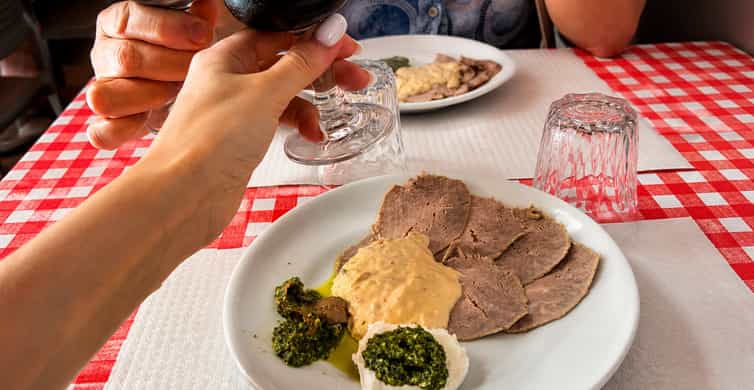
Two hours through the city centre with exactly the dishes on this page: tomini cheese from Piedmont, vitello tonnato with a glass of Piedmontese wine, fresh ravioli del plin from a pasta specialist, a tramezzino from a historic café, cream with warm zabaione and, to finish, an Umbertino or Bacio di dama from a historic pastry shop. Meeting point in front of the church of Santa Pelagia on Via San Massimo. Language: English (Italian on request for private tours).
from €70.84
Details & booking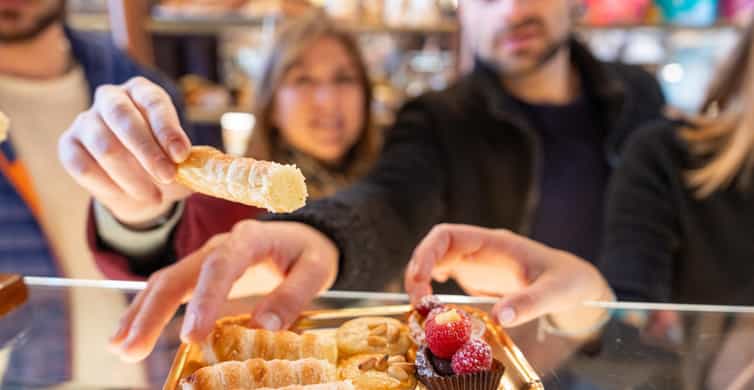
The in-depth version with more than four stops and a full meal: antipasti, handmade pasta, wine, chocolate and gelato. No more than 12 participants; meeting point on Piazza San Carlo in front of the church of Santa Cristina. Languages: English, Italian. Not suitable for people with reduced mobility.
from €107.10
Details & booking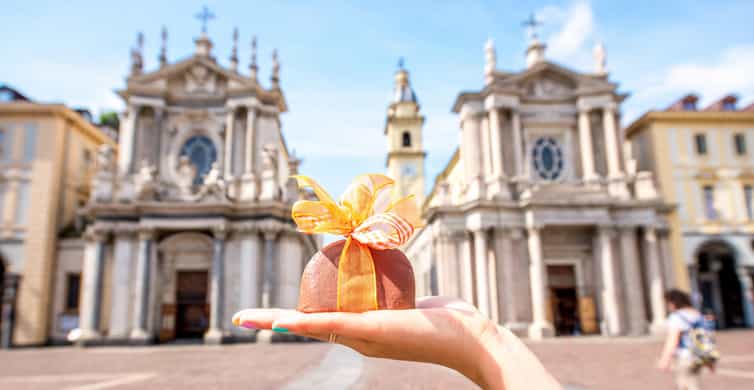
Two hours for anyone with a sweet tooth: Giandujotto, Cri-Cri chocolates, gelato, zabaione and, to round off, a Bicerin or vermouth in a historic café. Languages: Italian, English. According to the provider, not suitable for vegetarians or people with gluten intolerance.
from €39.00
Details & booking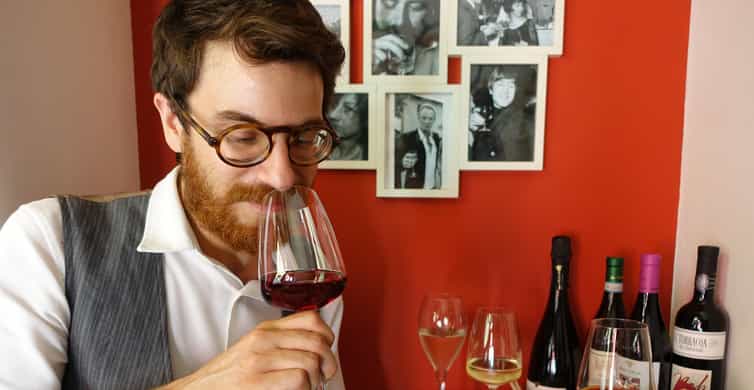
One hour in a wine bar about a 10-minute walk from the Royal Palace (Palazzo Reale): four wines from Piedmont, depending on the selection for example Arneis, Erbaluce, Nebbiolo or Barbera, with cold cuts, cheese and bread or grissini. No more than 8 participants. Languages: Italian, English.
from €42.00
Details & bookingAccording to the product pages, all four tours can be cancelled free of charge up to 24 hours in advance. More tours on our page food tours in Turin.
At a cooking class you learn to make Piedmontese pasta by hand. In the city you cook with locals; the most typical dishes are on the programme at the classes in the Langhe. All the classes are offered in English.
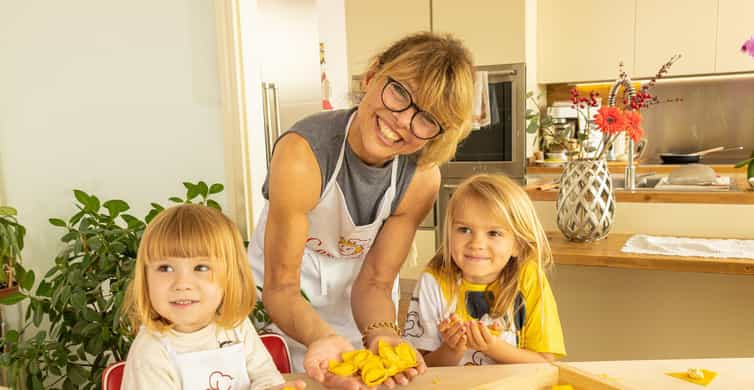
Just for you and your companion: at the home of a Cesarine host you learn three pasta recipes from Piedmont and then eat them with water, wine and coffee. You receive the address in Turin after booking. Languages: English, Italian.
from €145.00
Details & booking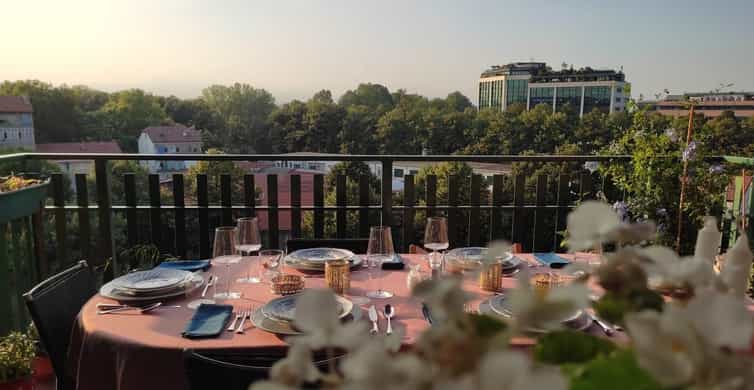
In a flat on Corso Belgio you make fresh pasta in several shapes, including tajarin and ravioli, plus tiramisù. No more than 8 participants, not for children under 12. Languages: English, French, Spanish, Italian.
from €95.00
Details & booking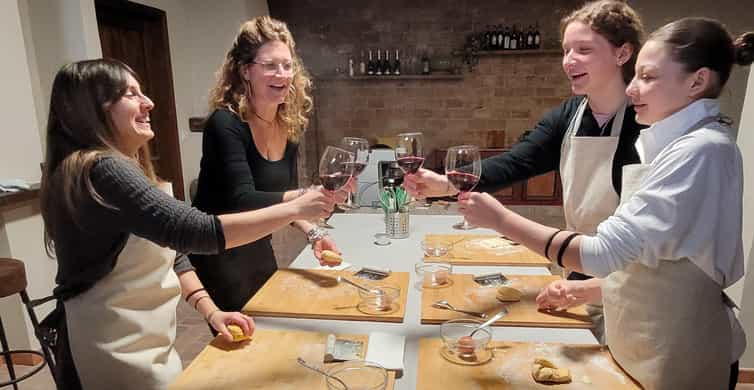
Among the vineyards of the Langhe, you cook three courses with a professional chef, such as a vegetable flan, tajarin and bonèt – with your own cooking station and no more than 8 participants. Afterwards you eat with wine. You need to organise your own travel from Turin. Languages: Italian, English, Spanish.
from €115.00
Details & booking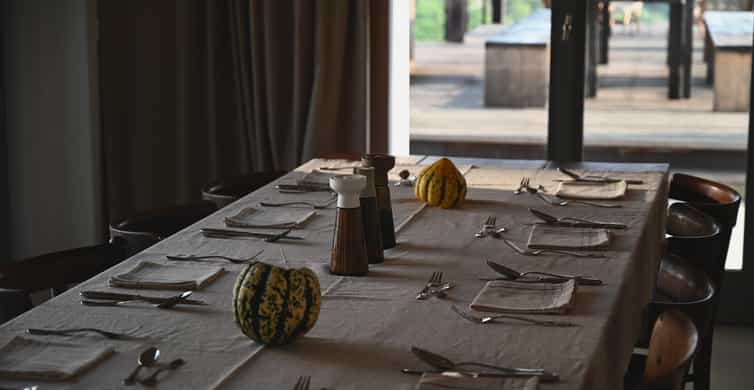
Near Castiglione Falletto in the Barolo area, a chef shows you handmade agnolotti, a braised dish and desserts; each course comes with wine from the area. Includes a recipe booklet. Languages: English, French, Italian, Spanish.
from €169.00
Details & bookingAccording to the product pages, all four classes can be cancelled free of charge up to 24 hours in advance. All classes compared: cooking classes in Turin.
Fruit, vegetables and cheese: at the Porta Palazzo market you shop like the locals. What you will find there and how to get there is on our market page.
Typical dishes are vitello tonnato, agnolotti del plin, tajarin, bagna càuda, bollito misto, brasato al Barolo and fritto misto alla piemontese. For dessert, bonèt and panna cotta, plus Giandujotto, Bicerin, grissini and vermouth – the last three are Turin specialities.
If you are short on time: vitello tonnato as a starter, agnolotti del plin or tajarin as your pasta, bonèt for dessert, plus a Bicerin in a café and a vermouth at aperitivo time.
Yes. Turismo Torino describes grissini as "an invention that is Turin through and through". The two classic types, grissino stirato and rubatà, are on the list of traditional food products of Piedmont. For the often-cited inventor and year there are only legends, no reliable source.
Both are filled pasta parcels made from egg dough. "Plin" means pinch: agnolotti del plin are pinched together between the fingers, which makes them smaller and folded. On Piedmont's PAT list, "Agnolotti" and "Plin" are separate entries.
Bagna càuda is eaten with seasonal vegetables. The highlight of the year is Bagna Cauda Day in Asti and many restaurants across Piedmont, in 2026 on the weekends of 20–22 and 27–29 November.
In Piedmont, white truffles may be hunted from 1 October to 31 January. The truffle fair in Alba runs from 10 October to 6 December 2026. All the details are on our page Alba & truffles.
Among others, Castelmagno, Bra and Toma Piemontese. Toma Piemontese is made in almost the whole region, Castelmagno only in three municipalities in the province of Cuneo.
Yes, Turismo Torino presents vitello tonnato as a classic starter of Piedmontese cuisine: thinly sliced, slow-cooked veal with a sauce of tuna, egg yolk, anchovies and capers.
Yes, all the tours featured here run in English, and most of them also in Italian. You can find an overview of all tours on our page food tours in Turin.
Yes, even though many classics contain meat or anchovies. Tajarin with butter, cheese, vegetable dishes and desserts such as bonèt and panna cotta are good options. With agnolotti, ask about the filling.