Skip to content

Capital 1861–1865

Turin, Italy's first capital: Risorgimento, Palazzo Carignano and museum

The first parliament of the Kingdom of Italy met in Palazzo Carignano, and on 17 March 1861 Victor Emmanuel II became King of Italy. Four years later the capital moved to Florence. Here you'll find out how it came about, what the Museo del Risorgimento shows and where to find the traces in the city.

  • The only surviving parliamentary chamber from 1848 in Europe
  • Museum: Tuesday to Sunday 10:00–18:00, closed on Mondays
  • Official admission €12.00, audio guide included
  • Free admission with the Torino + Piemonte Card
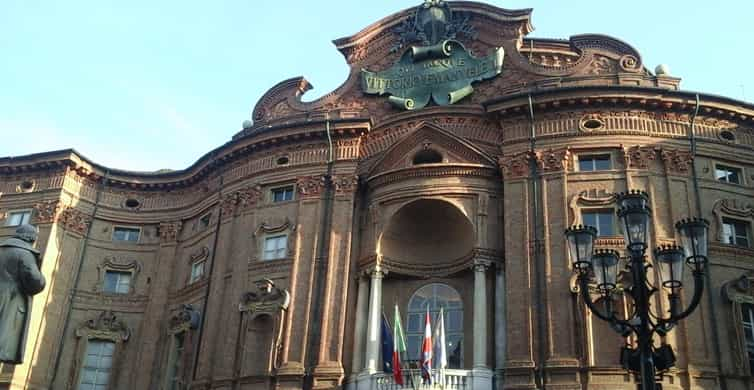
Curved Baroque brick façade of Palazzo Carignano on Piazza Carignano in Turin
Foto: Antonio Filigno / Pexels

Key facts at a glance

TopicInfo
Capital of ItalyTurin from 1861 to 1865, then Florence, Rome from 1871
ProclamationLaw of 17 March 1861: Victor Emmanuel II assumes the title “King of Italy”
ParliamentChamber of Deputies in Palazzo Carignano, Senate in Palazzo Madama
MuseumMuseo Nazionale del Risorgimento Italiano, entrance Piazza Carlo Alberto 8
Opening hoursTue–Sun 10:00–18:00, last entry 17:00, closed on Mondays
Official admission€12.00 standard, audio guide as a web app included
Torino Cardfree admission

How Turin became the capital in 1861

For centuries Turin had been the seat of the House of Savoy and the capital of the Kingdom of Sardinia. In 1848 King Charles Albert granted a constitution, the Statuto Albertino. He chose Palazzo Carignano as the seat of the new Chamber of Deputies. The Senate met in Palazzo Madama on Piazza Castello.

Through wars, Garibaldi's expedition to the south and plebiscites, the Kingdom of Sardinia grew by 1861 to cover almost the entire peninsula. The old chamber of the Subalpine Parliament was too small for the many new deputies. So the engineer Amedeo Peyron built a temporary chamber of wood and iron in the courtyard of Palazzo Carignano in 113 days, with around a thousand seats.

On 18 February 1861 King Victor Emmanuel II opened the first parliament of unified Italy there with a speech from the throne. The Senate voted 129 to 2 on 26 February for the law founding the kingdom, and the Chamber of Deputies on 14 March. The law of 17 March 1861 has just one article: the king assumes for himself and his successors the title “King of Italy”.

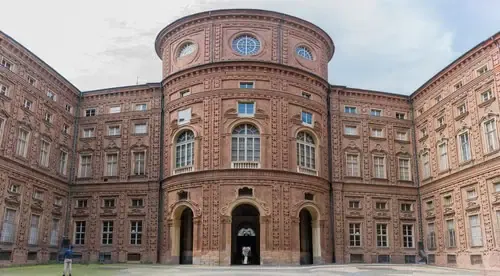
Courtyard of Palazzo Carignano in Turin with the curved brick central wing
© PK289 / Shutterstock.com

Timeline: Turin as capital

DateEvent
1679Guarino Guarini designs Palazzo Carignano for the Princes of Savoy-Carignano.
1848Statuto Albertino. The ballroom of Palazzo Carignano becomes the Chamber of Deputies of the Subalpine Parliament.
28 December 1860Last session in the chamber of the Subalpine Parliament – the clock and date can still be seen there today.
18 February 1861Opening of the first Italian parliament in the temporary chamber in the courtyard of Palazzo Carignano.
17 March 1861Law no. 4671: Victor Emmanuel II becomes King of Italy, Turin is the capital.
6 June 1861Death of Camillo Benso, Count of Cavour, in Turin.
15 September 1864September Convention with France: the capital is to be moved to Florence.
21/22 September 1864Protests on Piazza San Carlo and Piazza Castello; soldiers fire into the crowd.
11 December 1864Law no. 2032 on moving the capital within six months.
1865Florence becomes the capital. In April 1865 the temporary chamber in Turin is demolished.
1864–1871Construction of the large chamber for the Italian Chamber of Deputies in Palazzo Carignano – it is never used as a parliament.
1871Rome replaces Florence as the capital.
1938The Museo Nazionale del Risorgimento moves into Palazzo Carignano.

Sources: Museo Nazionale del Risorgimento, Camera dei deputati, Residenze Reali Sabaude, the City of Turin's MuseoTorino.

Cavour: the Turin native who united Italy

Camillo Benso, Count of Cavour, was born in Turin on 10 August 1810 and died there on 6 June 1861 – less than three months after the kingdom was founded. From 1852 he was head of government of the Kingdom of Sardinia, and in 1861 of the new Kingdom of Italy. He is regarded as the diplomat of unification: he used alliances, plebiscites and Garibaldi's expedition south to turn the Kingdom of Sardinia into the Kingdom of Italy.

You'll come across him in several places in Turin:

  • Chamber of the Subalpine Parliament: This is where Cavour addressed the deputies, as did Gioberti and D’Azeglio. The chamber is part of the museum route.
  • Del Cambio: The restaurant on Piazza Carignano has been open since 1757. Because of all the politicians, it was nicknamed the “vice-parliament” in the days of the Subalpine Parliament. Cavour is said to have kept an eye on the window opposite from his table, so that his secretary could call him when needed.
  • Palazzo Cavour: The statesman's home on Via Cavour now belongs to the Piedmont Region and is used as an exhibition venue. There are no regular visits, only during exhibitions and events.
  • Cavour monument: In the middle of Piazza Carlo Emanuele II, which the people of Turin call “Piazza Carlina”, stands his marble monument by Giovanni Duprè. The inscription gives his dates of birth and death.
Brick façade of Palazzo Carignano, seat of the first Italian parliament
Foto: Antonio Filigno / Pexels

1864: the September Convention, riots and the move to Florence

In 1861 Rome still belonged to the Papal States and was protected by French troops. In the September Convention of 15 September 1864, Italy agreed with Napoleon III that France would withdraw its soldiers from Rome within two years and Italy would move its capital from Turin to Florence within six months.

In Turin the news caught people completely off guard. The city council protested, and the newspapers spoke of betrayal. On 21 and 22 September 1864 angry crowds gathered on Piazza San Carlo and Piazza Castello. Soldiers charged with bayonets and fired into the crowd. According to MuseoTorino, the city's history portal, around 50 demonstrators died and about 130 were injured. The exact figures vary from source to source.

The law of 11 December 1864 confirmed the move. In 1865 Florence became the capital, and the king, government and parliament left Turin. In April 1865 the temporary chamber in the courtyard of Palazzo Carignano was demolished. Finally, in 1871, Rome became the capital.

Piazza San Carlo in Turin with the twin churches of Santa Cristina and San Carlo
Foto: Roberto Copernico / Pexels

Palazzo Carignano: one palace, two façades

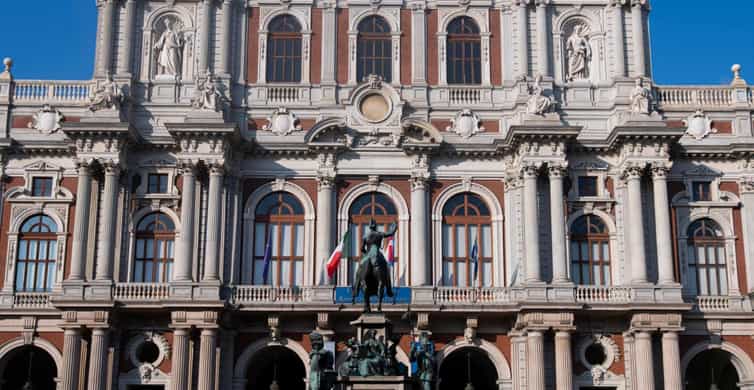
Guarino Guarini designed Palazzo Carignano in 1679 for Emanuele Filiberto of Savoy-Carignano. The curved brick façade on Piazza Carignano draws on Bernini's design for the Louvre and is considered one of the masterpieces of Piedmontese Baroque. Charles Albert and his son Victor Emmanuel II, the first King of Italy, were both born in the palace.

Walk once around the building and you'll see a completely different façade on Piazza Carlo Alberto. For the parliament of the larger kingdom, Domenico Ferri and Giuseppe Bollati had the old gardens cleared from 1864 and new wings built with a large chamber. By the time it was completed in 1871, parliament had long since moved to Florence, and shortly afterwards to Rome. The chamber was never used as a parliament.

Today there are two separate visits in Palazzo Carignano, with separate tickets:

  • Museo Nazionale del Risorgimento Italiano on the main floor, since 1938. Entrance at Piazza Carlo Alberto 8.
  • Appartamenti dei Principi on the ground floor, the living quarters of the Princes of Carignano, open to the public since 2011. Official admission €5.00, free for under-18s. Booking via museiitaliani.it is required. The rooms are only open on certain weekdays – check the times before your visit.
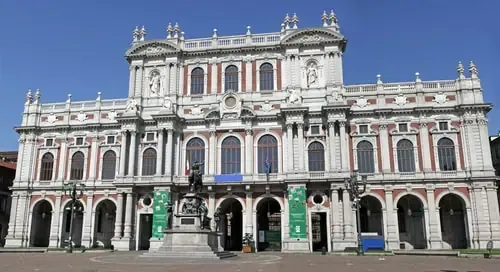
Façade of Palazzo Carignano on Piazza Carlo Alberto with equestrian statue, home of the Museo del Risorgimento
© pseudolongino / Shutterstock.com

Museo del Risorgimento: what you'll see

The museum tells the story of Italian unification from a political, military, cultural and economic angle – in 30 rooms with more than 2,500 objects. It is the only museum of the Risorgimento recognised as being of national importance.

Subalpine Parliament

In 1848 Carlo Sada converted the oval ballroom into the first Chamber of Deputies in just over a month. It is the only parliamentary chamber from 1848 that survives intact in Europe, and a national monument. The clock shows the last session: 28 December 1860, 14:30.
Aula of the Camera italiana

The large chamber for the parliament of the Kingdom of Italy was built between 1864 and 1871. Francesco Gonin painted the vaults, and four large battle paintings of the Risorgimento hang on the walls.

30 rooms, 2,500 objects

Documents, paintings, weapons, uniforms and mementoes of Cavour, Garibaldi, Mazzini and many others. There are also temporary exhibitions; the current programme is on the museum's website.

Audio guide included

Every ticket includes the audio guide as a web app on your smartphone. You get the QR code at the ticket desk. There are audio guides for visually impaired visitors, as well as video guides in Italian Sign Language.

Opening hours and admission prices

The museum is open Tuesday to Sunday from 10:00 to 18:00. Last entry is at 17:00, and it is closed on Mondays. You can get tickets at the ticket desk or online in the official ticket shop.

TicketOfficial admission
Adults€12.00
Reduced (65 and over, groups of 10 or more, military)€10.00
Family (up to 4 people, including 2 adults)€20.00
Ages 20 to 26€6.00
Ages 6 to 19€4.00
Under 6, people with disabilities + companion, teachersfree
Torino + Piemonte Card, Abbonamento Museifree

Official prices according to museorisorgimentotorino.it, as of October 2026. Special exhibitions and public holiday opening: museorisorgimentotorino.it.

Guided tours: museum and old town

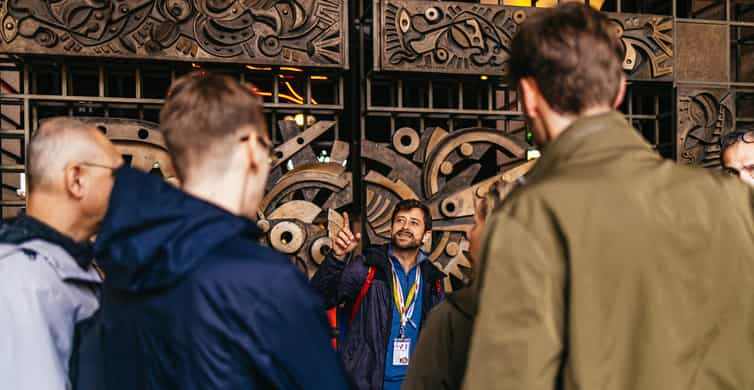
The museum itself offers a guided tour on Saturdays and Sundays at 15:30. You pay admission plus €4.00 per person, and places are limited; book in advance via the museum's website. Guided tours in various languages are possible on request. You can plan these bookable tours flexibly:

Museum tour + café

Museum tour + café

5.0 · 1 reviews

🗣 English, Italian

Two hours through the Museo del Risorgimento including the chamber of the Subalpine Parliament, followed by a drink in a historic café. Admission and headsets are included, special exhibitions are not. Languages: Italian, English. Meeting point in front of the museum. Free cancellation up to 3 days in advance according to the provider.

from €59.00

Details & booking
City highlights walk

City highlights walk

4.9 · 979 reviews

⏱ 2 hours🗣 English, Italian

Two hours in a small group to Piazza San Carlo, Piazza Carignano and Piazza Castello with Palazzo Reale and Palazzo Madama, as far as the Mole. No museum visit. Languages: English, Italian. Free cancellation up to 24 hours in advance according to the provider.

from €39.00

Details & booking
Classic walking tour 2.5 h

Classic walking tour 2.5 h

4.4 · 27 reviews

⏱ 3 hours🗣 English, Greek, Italian, Polish

Palazzo Madama, Palazzo Reale, the cathedral, Piazza San Carlo, Piazza Carignano and the Quadrilatero Romano, with espresso and giandujotti. Meeting point Piazza Castello. Languages: English, Greek, Italian, Polish. Free cancellation up to 24 hours in advance according to the provider.

from €87.00

Details & booking

The bookable museum tour specifically on the Risorgimento is available in Italian and English according to the provider.

Free museum entry with the Torino Card

With the Torino + Piemonte Card, admission to the Museo del Risorgimento is free, as it is to the Appartamenti dei Principi in the same palace (there with compulsory booking). Right next door, the card also gets you into the Egyptian Museum, Palazzo Madama and the Musei Reali for free.

According to Turismo Torino, the Royal Pass is valid for the Appartamenti dei Principi. The museum's price page lists free admission with the “Royal Card”. It's best to check with the museum in advance whether your Royal Pass is also valid for the museum.

More about the Torino Card
Torino + Piemonte Card

Walking route: in the footsteps of the capital

All the places are close together in the old town, so you can easily walk the route. Ideally, start in the morning at the museum; it is closed on Mondays. Allow about two hours for the museum.

  1. Piazza Carlo Alberto: museum

    Start at the museum entrance at Piazza Carlo Alberto 8, in front of the 19th-century façade. Inside the museum you'll see the chamber of the Subalpine Parliament and the never-used chamber of the Italian parliament.

  2. Courtyard of Palazzo Carignano

    This is where the temporary chamber stood in 1861, in which the first Italian parliament met. From the courtyard you can see Guarini's curved central wing.

  3. Piazza Carignano

    Piazza Carignano lies in front of the Baroque brick façade. Opposite the palace you'll find Del Cambio, the deputies' “vice-parliament”. On the same piazza is the Gelateria Pepino, which in 1939 invented the first chocolate-coated ice cream on a stick.

  4. Palazzo Madama: the Senate

    Via Accademia delle Scienze takes you to Piazza Castello. From 1848 the Senate of the Subalpine Parliament met in Palazzo Madama, followed by the first Senate of the Kingdom of Italy. Today it houses the Museum of Ancient Art; it is closed on Tuesdays. Right next to it are the Palazzo Reale and the Musei Reali.

  5. Piazza San Carlo

    Walk along Via Roma to Piazza San Carlo. This square and Piazza Castello were the scene of the bloody protests against the move to Florence in September 1864. Under the arcades is Caffè San Carlo, dating from 1822, a meeting place of the Risorgimento era. More on the historic cafés: Chocolate, Bicerin and cafés.

  6. Via Cavour: Palazzo Cavour

    Via Lagrange brings you to Via Cavour and Palazzo Cavour, the statesman's home. You can only go inside during exhibitions.

  7. Piazza Carlina: Cavour monument

    The route ends on Piazza Carlo Emanuele II, the “Piazza Carlina”, at Giovanni Duprè's marble monument to Cavour. From here it is not far to the Mole Antonelliana.

Getting to the museum

The museum is right in the old town; the entrance is at Piazza Carlo Alberto 8.

  • On foot: From Porta Nuova station along Via Carlo Alberto in around 15 minutes. From Porta Susa station it takes about 30 minutes. More on the stations: Train stations in Turin.
  • Bus and tram: Bus lines 14, 18, 56, 67 and 72 (Roma and Castello stops) and tram lines 4 and 13 stop nearby. Tickets and fares: Public transport in Turin.
  • Car: The museum recommends the Roma–San Carlo–Castello car park, which is open 24 hours (access via Piazza Castello, Piazza Carlo Felice and Via Lagrange). Watch out for the traffic restrictions in the city centre: Driving, ZTL and parking.

The museum is fully accessible, with adapted toilets.

More about the Savoys

Who were Charles Albert and Victor Emmanuel II, and where did the Savoys leave their mark in Turin and Piedmont? You can read all about the ruling family that gave Italy its first kings on our House of Savoy page.

See the House of Savoy
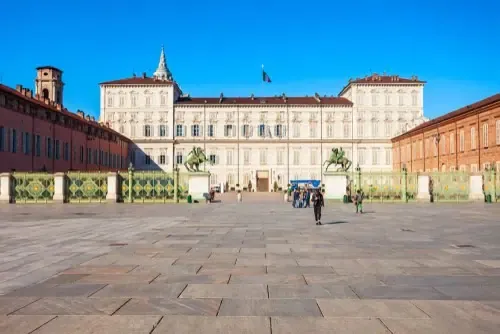
Palazzo Reale in Turin

Turin as capital and the Museo del Risorgimento: frequently asked questions

Back to top