Skip to content

UNESCO World Heritage since 1997

The House of Savoy and Turin: history and residences

For around 300 years the Savoys ruled from Turin – first as dukes, then as kings of Sardinia and, from 1861, as kings of Italy. Their palaces, hunting lodges and villas still shape the city today.

  • 22 palaces and villas listed as UNESCO World Heritage
  • Turin capital of the Savoys from 1562/63, of Italy 1861–1865
  • Royal Pass: 16 residences in 96 hours
  • Free cancellation at Tiqets up to 24 hours in advance

from€30.00per person

Buy the Royal Pass
Rated 5.0 out of 55.0
1 reviews
Book via Tiqets

Who were the Savoys?

The House of Savoy is one of the oldest ruling families in Europe. Its homeland lay in the Western Alps, on both sides of today's border between France and Italy. The founder of the dynasty is considered to be Count Umberto Biancamano (Humbert the White-Handed), who lived around the turn of the 10th to the 11th century.

Over the centuries the Counts of Savoy expanded their territory, above all by controlling the Alpine passes. In 1416 Amadeus VIII received the title of duke from Emperor Sigismund. For a long time the capital was Chambéry, on the French side of the Alps.

Turin only became the seat of the court in the 16th century – and remained so until Italy moved its capital to Florence in 1865. The Savoys ruled Italy until the end of the monarchy in 1946.

Timeline: from Chambéry to the Republic

The key dates of the Savoys in Turin at a glance.

YearEvent
1416Amadeus VIII becomes Duke of Savoy.
1453The Shroud passes into the possession of the Savoys.
1557Emmanuel Philibert wins at Saint-Quentin (San Quintino).
1559Peace of Cateau-Cambrésis: Emmanuel Philibert gets his lands back.
1562/1563The capital moves from Chambéry to Turin.
1578The Shroud comes from Chambéry to Turin.
1706Siege of Turin; Victor Amadeus II vows to build the Basilica di Superga.
1713Victor Amadeus II receives Sicily and becomes king.
1720Sicily is exchanged for Sardinia: the Savoys become kings of Sardinia.
1848On 4 March Charles Albert grants the Statuto Albertino, the constitution.
1861On 17 March Victor Emmanuel II becomes King of Italy; Turin is the first capital.
1865The capital moves to Florence.
1946Referendum on 2 June: Italy becomes a republic; Umberto II goes into exile on 13 June.
1983After the death of Umberto II, the Shroud passes to the Holy See under his will.
1997The Residences of the Royal House of Savoy become a UNESCO World Heritage Site.

From Chambéry to Turin: 1562 or 1563?

The Savoys owe their move to Turin to Duke Emmanuel Philibert (Emanuele Filiberto). In the war between France and Spain the duchy had lost large parts of its territory. Emmanuel Philibert fought on the Spanish side and won at Saint-Quentin in 1557. In the Peace of Cateau-Cambrésis in 1559 he got his lands back.

He then moved the capital across the Alps to Turin. Two official sources disagree on the year:

  • 1562 is the year UNESCO gives in its description of the World Heritage Site: in that year Emmanuel Philibert moved his capital to Turin and began expanding it.
  • 1563 is the year the Musei Reali, the museum in the former Royal Palace, give for the move of the capital from Chambéry to Turin.

Both dates describe the same process. The relocation of the court fell across these two years – if you want to be precise, write “1562/63”.

At the time Turin was still a small town with a Roman street grid. The Savoys turned it into a Baroque capital: with palaces around Piazza Castello, straight axes and squares. You can see how much of the Roman core is still visible today in the Quadrilatero Romano.

Piazza San Carlo in Turin from above – Baroque square of the Savoy capital
Foto: Riccardo Zerbinati / Pexels

The key figures

Six members of the House of Savoy whose traces you can still see in Turin today.

Emmanuel Philibert

Born in Chambéry in 1528, duke from 1553, died in Turin in 1580. He made Turin the capital, brought the university to the city in 1566 and had Italian and French used in official documents instead of Latin. In 1564 he bought the villa on the Po that became the Castello del Valentino. In thanks for the victory at Saint-Quentin he vowed to build a church – the later Real Chiesa di San Lorenzo.

Charles Emmanuel I

Born in Rivoli in 1562, duke from 1580 to 1630. In 1585 he married the Spanish Infanta Catherine and fought numerous wars, including over the Marquisate of Saluzzo. During his reign Ascanio Vitozzi began the Palazzo Reale project in 1584, and construction of the Chapel of the Holy Shroud (Cappella della Sindone) started in 1607. He gave the Capuchins the hill of today's Monte dei Cappuccini.

Christine, Madama Reale

Christine of France (1606–1663), daughter of King Henry IV, married Duke Victor Amadeus I. From 1620 she had the Castello del Valentino converted into a pleasure residence. After her husband's death in 1637 she ruled as regent for her underage sons. As “Madama Reale” she gave Palazzo Madama its name: from the 1640s it was the official residence of the two Madame Reali.

Victor Amadeus II

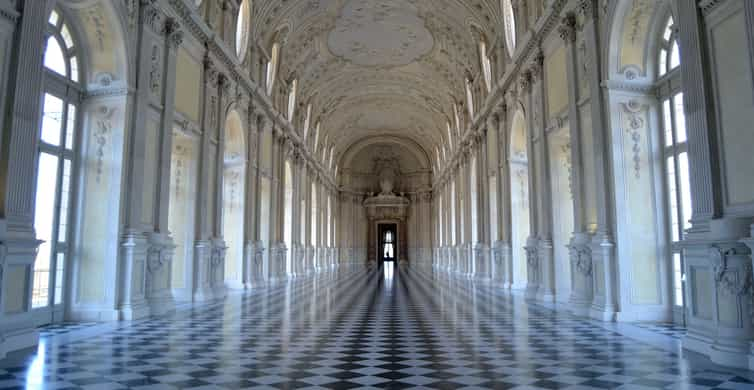
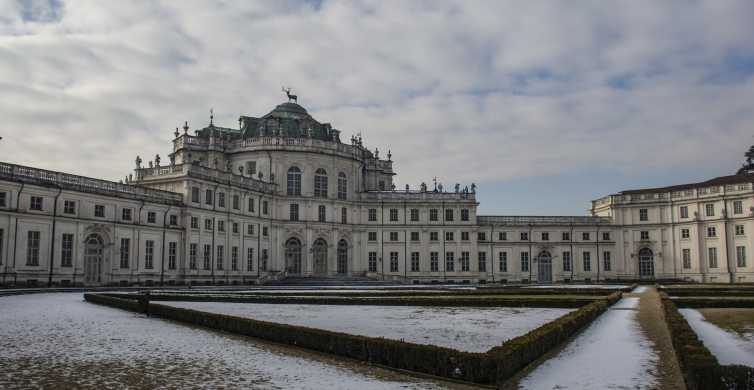
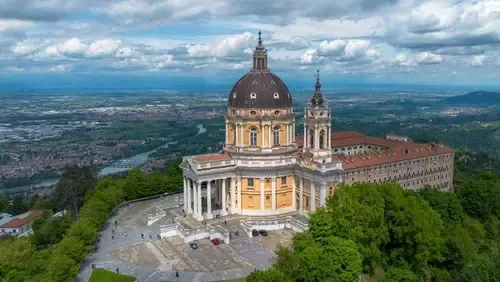
He defended Turin in 1706 against the siege by the army of Louis XIV and vowed to build the Basilica di Superga in return. In 1713 he received Sicily and the title of king, and in 1720 he exchanged Sicily for Sardinia. His court architect Filippo Juvarra built Superga, the Galleria Grande in Venaria and, from 1729, the Stupinigi hunting lodge.

Charles Albert

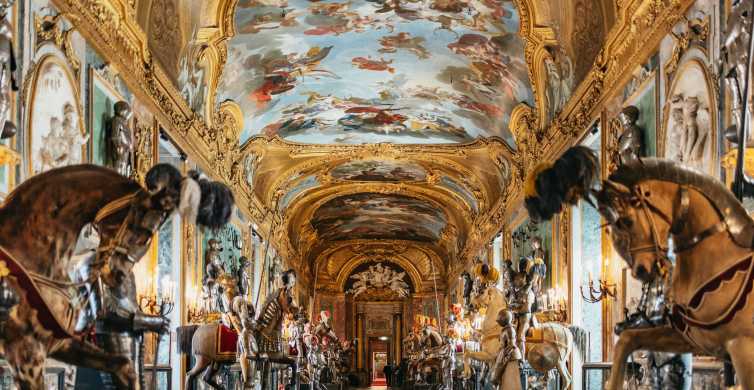
Born in Turin in 1798, King of Sardinia from 1831 to 1849. He founded the Galleria Sabauda in 1832 and opened the Armeria Reale in 1837, today part of the Musei Reali. On 4 March 1848 he granted the Statuto Albertino. After the defeat at Novara he abdicated on 23 March 1849 and died the same year in Porto. His sarcophagus stands in the crypt of Superga.

Victor Emmanuel II

Son of Charles Albert, King of Sardinia from 1849. On 17 March 1861 he became King of Italy, and Turin became the first capital of the new state. In 1865 the capital moved to Florence. You can read more about this period on our page Turin, Italy's first capital.

From dukes to kings: 1713, 1720, 1861

It was Victor Amadeus II who achieved the rise from duchy to kingdom. After the War of the Spanish Succession he received Sicily in 1713, and with it a royal crown. In Palazzo Madama a room from 1713/14 celebrates exactly this transition from duchy to kingdom. In 1720 he had to exchange Sicily for Sardinia. From then on the Savoys called themselves kings of Sardinia – but they continued to rule from Turin.

In the 19th century Turin became the centre of Italian unification. From 1848 the Senate (Senato Subalpino) met in Palazzo Madama and the Subalpine Parliament in Palazzo Carignano. On 17 March 1861 the Kingdom of Italy was proclaimed, with Victor Emmanuel II as king and Turin as capital. After only four years, in 1865, the capital moved to Florence.

The end came after the Second World War. In the referendum on 2 June 1946, 54.3 per cent voted for the republic. Umberto II, the last king, went into exile on 13 June 1946. The Musei Reali have been state property since 1946.

The Savoys and the Shroud

The Shroud of Turin, the Sindone, belonged to the Savoys for around 530 years. It passed into their possession in 1453 and was initially kept in Chambéry. In 1578 Emmanuel Philibert had it brought to Turin – partly to make the pilgrimage easier for the Archbishop of Milan, Charles Borromeo. Its first home was the provisional church on the site of today's Real Chiesa di San Lorenzo.

The Savoys had a chapel of its own built for the cloth between the palace and the cathedral. The Chapel of the Holy Shroud was begun in 1607, and Guarino Guarini took over from 1666. The Shroud was kept there from 1694 to 1993, and in the cathedral since then. After the fire of 1997 the chapel was restored and reopened in 2018. Today you visit it as part of the Musei Reali route.

When Umberto II died in 1983, the Shroud passed to the Holy See under his will. It is only shown during special exhibitions in the cathedral. You'll find more about the Shroud and the Museo della Sindone on our page about the Quadrilatero Romano.

The “Corona di Delizie”: UNESCO World Heritage since 1997

Since 1997 the “Residences of the Royal House of Savoy” have been on UNESCO's World Heritage List. They comprise 22 palaces and villas that the dukes built or remodelled in and around Turin from 1562 onwards – for running the state and for hunting, festivities and relaxation. Most of the buildings date from the 17th to the 19th century, by architects such as Ascanio Vitozzi, Guarino Guarini, Filippo Juvarra and Benedetto Alfieri.

The ensemble follows a plan:

  • The “Command Area” (Zona di Comando) in the centre: 11 buildings in the city, around the Palazzo Reale. They include Palazzo Chiablese, Palazzo Madama, Palazzo Carignano, the Armeria Reale and the Teatro Regio. This is where the court, government and administration were based.
  • The “Corona di Delizie” all around: 11 pleasure palaces and hunting residences, radiating out around the capital – from the Castello del Valentino and the Villa della Regina in the city to Venaria, Stupinigi, Rivoli, Moncalieri, Racconigi, Agliè, Pollenzo and Govone. The name means “Crown of Delights”.

You can visit many of the residences, some only with a reservation or on a few days. The overview below shows which ones you can visit with which pass.

Palazzina di Caccia di Stupinigi with the stag on the dome
Foto: Antonio Filigno / Pexels

The residences at a glance

The main residences in Turin and the surrounding area – with pass status and a link to our detailed page.

ResidenceLocationTorino CardRoyal Pass
Palazzo Reale / Musei RealiPiazza Castello, centrefreefree
Palazzo MadamaPiazza Castello, centrefreefree
Palazzo Carignano (Appartamenti dei Principi)Centrefree, reservation requiredfree, reservation required
Palazzo ChiablesePiazzetta Reale, centreadmission free anyway, reservation onlyadmission free anyway, reservation only
Castello del ValentinoParco del Valentino, San Salvarioadmission free anyway, guided tours only with registrationadmission free anyway, guided tours only with registration
Villa della ReginaHill across the Po, Borgo Pofree, reservation required on Sundays and public holidaysfree, reservation required on Sundays and public holidays
Reggia di Venaria Reale with Castello della MandriaVenaria Reale, about 10 kmfree (Mandria with reservation)free (Mandria with reservation)
Palazzina di Caccia di StupinigiNichelino, about 10 kmfreefree
Castello di Rivoli (Museum of Contemporary Art)Rivolifreefree
Castello di MoncalieriMoncalierifree, reservation requiredfree, reservation required
Castello di Racconigi, Castello di Agliè, Castello di GovonePiedmontfree (Racconigi and Agliè with reservation)free (Racconigi and Agliè with reservation)
Basilica di Superga (royal tombs)Superga hillfree (tombs, royal apartment, dome)free access

As of October 2026 according to Turismo Torino and the residences' websites. Opening days and reservation rules change – check the website of each residence before your visit. The Basilica di Superga is the burial place of the Savoys, but not one of the 22 World Heritage buildings.

Where the Savoys are buried: Superga

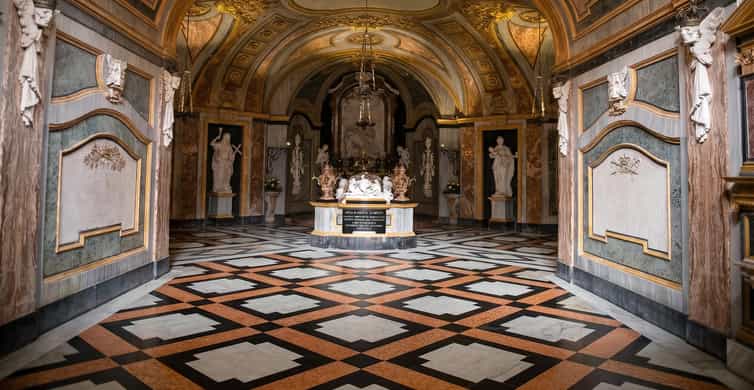
The crypt of the Basilica di Superga is the burial place of the House of Savoy. Victor Amadeus III had it built between 1774 and 1778. More than 60 members of the family are buried here. Charles Albert has lain in the central sarcophagus since 1849. There is also a Chapel of the Queens and a Chapel of the Infantes.

You can only visit the tombs on a guided tour. It lasts 45 minutes and is in Italian; printed accompanying texts are available for other languages. Ideally, combine your visit with a ride on the historic rack railway from Sassi and the view from the dome. Everything about getting there, opening hours and admission is on our Basilica di Superga page.

Basilica di Superga on the hill above Turin

Visiting the residences with a guide

The history of the Savoys comes alive best with a guide. These guided tours are available for the main residences, each including admission:

Palazzo Reale: guided tour

Palazzo Reale: guided tour

4.8 · 609 reviews

⏱ 2 hours🗣 English, Italian, French, German, Spanish

Two hours through the Royal Palace, including the Hall of Mirrors, the Ballroom, the Armoury and the Library. Languages: Italian, English, French, German, Spanish. The meeting point is Piazzetta Reale 1.

from €59.00

Details & booking
Venaria Reale: guided tour

Venaria Reale: guided tour

4.7 · 269 reviews

⏱ 3 hours🗣 English, Italian, French, Spanish, German

Small-group tour of the Savoys' hunting palace with a licensed guide, offered in several languages, including English. The meeting point is on site in Venaria.

from €145.00

Details & booking
Stupinigi: 90-min guided tour

Stupinigi: 90-min guided tour

4.1 · 14 reviews

⏱ 1.5 hours🗣 English, Italian, French, German, Spanish

90 minutes through Juvarra's hunting lodge, maximum 10 people. Languages: Italian, English, French, German, Spanish. The meeting point is the gate at the main entrance.

from €125.00

Details & booking
Superga: royal tombs

Superga: royal tombs

4.3 · 15 reviews

⏱ 45 minutes🗣 English, French, Spanish, Italian

Guided tour of the Savoy crypt, the cloister and the Hall of the Popes, offered by the basilica itself. The tour is in Italian, with printed accompanying texts in other languages.

from €6.00

Details & booking

According to the provider, free cancellation up to 24 hours in advance is possible for all four tours.

The Royal Pass: all the residences with one card

The Turin Royal Pass is the key to the Savoy residences. It is valid for 96 hours from the first scan at 16 residences in Turin, around Turin and in Piedmont – from the Palazzo Reale to Venaria and Stupinigi, as far as Racconigi and Valcasotto. The Basilica di Superga is free to access. It is valid for one adult and one child under 12 with the same benefits. The Egyptian Museum and the National Cinema Museum are only discounted. You can get the pass from €30.00.

For Mandria, Moncalieri, Palazzo Carignano and, on Sundays, the Villa della Regina you need to book in advance.

All about the Royal Pass
Turin Royal Pass for the residences of the House of Savoy

Royal Pass or Torino Card?

With the Torino + Piemonte Card you also get into most of the residences for free – plus the Egyptian Museum and the National Cinema Museum. If you're only planning palaces and castles, the Royal Pass is usually the cheaper choice. If you want to combine museums and residences, the Torino Card often pays off. Our comparison works through both options with examples.

See the comparison

House of Savoy and Turin: frequently asked questions

Back to top