Caffè Al Bicerin
On Piazza della Consolata 5 since 1763. The home of Bicerin, with marble tables and wood panelling (see above).

Turin's sweet side
Turin calls itself the capital of Italian chocolate. The Gianduiotto was created here in 1865, here you drink Bicerin in the café that gave it its name – and at the Choco-Story museum you see how cocoa becomes gianduja.
from€12.00per person
See Choco-Story tickets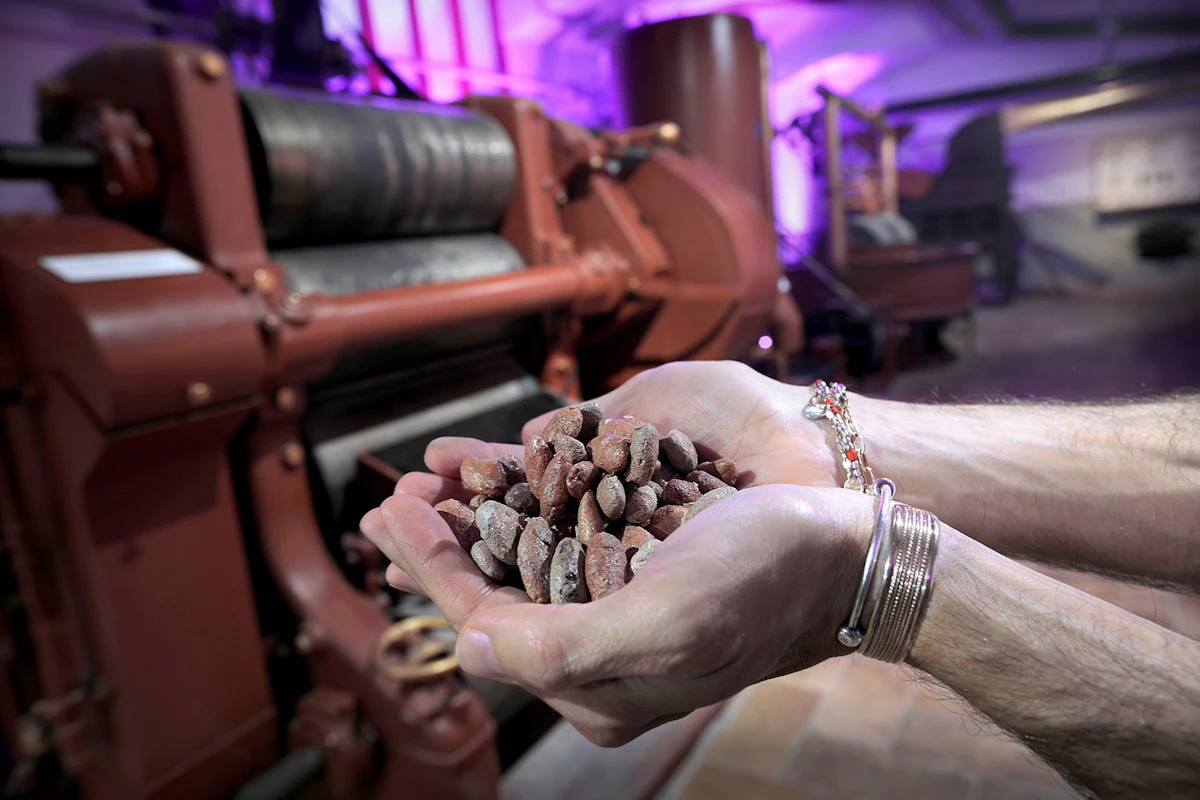
Turin looks back on a centuries-old tradition of chocolate making. The tourist board, Turismo Torino, calls the city "the capital of Italian chocolate". Under the arcades in the centre you'll still find historic confectioners, pastry shops and cafés that make their own chocolates.
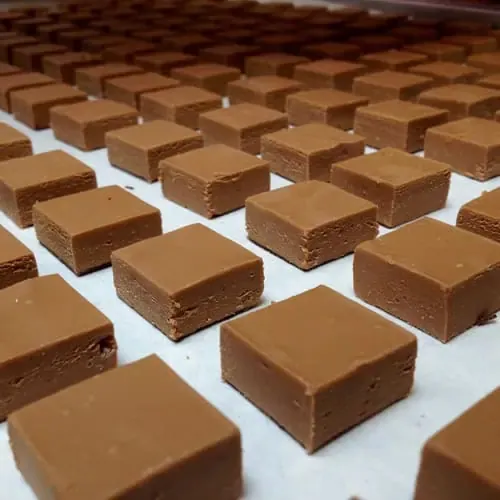
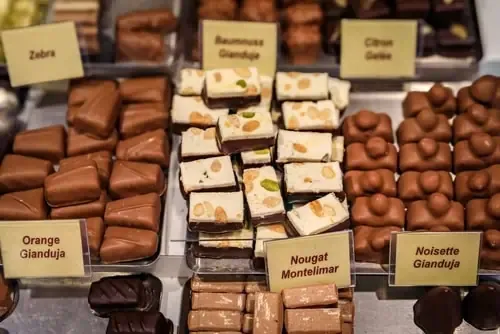
The Gianduiotto is the symbol of this tradition. The chocolate is shaped like an upturned boat and made from cocoa, sugar and hazelnuts of the Piedmontese "Tonda Gentile" variety. Officially, the Gianduiotto was created in 1865 in the workshop of the Prochet Gay e C. company on Piazza San Carlo. The chocolate and hazelnut paste is called gianduja – hence the name.
The Cremino is the second Turin chocolate you should know: a three-layered chocolate made of gianduja chocolate and hazelnut cream. According to Turismo Torino it was invented by Ferdinando Baratti, one of the two founders of Baratti & Milano.
If you want to discover Turin's chocolate with a guide, our page on food tours in Turin also has walks with savoury stops, wine and vermouth.

"Bicerin" means "small glass" in Piedmontese. Three ingredients are layered in it: coffee, chocolate and cream. The exact proportions remain a secret. Bicerin is served in a glass so you can see the layers.
The drink developed from the Bavareisa, which was fashionable in the 18th century. At first the ingredients came separately in three small glasses, the "stisse", which you mixed yourself. Since the 19th century, Bicerin has been served as a single drink. Since 2001 it has been officially recognised as a "traditional drink of Piedmont". Among its fans was Count Camillo Benso di Cavour.
The café that gave the drink its name is at Piazza della Consolata 5, opposite the entrance to the Santuario della Consolata. It was founded in 1763 by the liqueur merchant Giuseppe Dentis. The current building dates from 1856 and was designed by the architect Carlo Promis.
Inside you'll find wood panelling with mirrors, the typical round white marble tables and a counter of wood and marble. For decades the café was run by women, including Ida Cavalli from 1917 to 1971 and Maritè Costa from 1983 to 2015. In 2001 the Gambero Rosso named Al Bicerin the best bar in Italy. The corner table where Cavour is said to have sat is still there today.
Combine your visit with a look inside the Santuario della Consolata directly opposite. You'll find opening hours on bicerin.it.
According to Turismo Torino, much of the history of Italian unification and of 20th-century literature was written at café tables. Guests included Cavour, Alexandre Dumas, who was in Turin in 1852, Friedrich Nietzsche, Guido Gozzano and Cesare Pavese. You can still visit these cafés today:
On Piazza della Consolata 5 since 1763. The home of Bicerin, with marble tables and wood panelling (see above).
At Via Po 8 since 1780. Rattazzi, D’Azeglio and Cavour were regulars here. King Carlo Alberto is said to have asked every morning: "What are they saying at the Fiorio?" Known for gelato, especially gianduja gelato, and hot chocolate. Closed on Mondays.
Founded in 1858 by the confectioners Ferdinando Baratti and Edoardo Milano. The café is at Piazza Castello 27, at the entrance to the Galleria Subalpina, with Art Nouveau furnishings. Home of the Cremino.
Under the arcades at Piazza San Carlo 156 since 1822, in Palazzo Turinetti di Priero. During the Risorgimento a meeting place for politicians, intellectuals and artists.
On Piazza San Carlo since 1903 and, according to Italy's official tourism portal, the square's best-known café. Pavese, Einaudi and De Gasperi were among its regulars.
At Piazza Castello 15 since 1907, just 31 square metres in size, with panelling in bronze, wood and brass. According to Turismo Torino, Angela Demichelis Nebiolo invented the tramezzino sandwich here in 1926.
At Corso Vittorio Emanuele II 72, with original Art Nouveau furnishings. A meeting place for Cesare Pavese and Giulio Einaudi; the café makes its own chocolates and Gianduiotti.
At Piazza Vittorio Veneto 5. Since the late 19th century a meeting place for students, artists and intellectuals from the nearby Accademia Albertina and university. According to the association of historic cafés, Giuseppe Carpano refined his vermouth recipe here between 1889 and 1902.
At Piazza Carignano 8 since 1884. In 1939 Pepino invented the "Pinguino", according to Turismo Torino the first chocolate-coated ice cream on a stick.
At Piazzetta Reale 1 in the Royal Palace, in the former court fruit store. This is where you can have the "Merenda Reale", an afternoon snack in the style of the royal court (see below). More about the palace on our Musei Reali page.
Most cafés are between Piazza Castello, Piazza San Carlo and Via Po – easy to link up on foot.
| Café | Since | Address | Known for |
|---|---|---|---|
| Caffè Al Bicerin | 1763 | Piazza della Consolata 5 | Bicerin |
| Caffè Fiorio | 1780 | Via Po 8 | Gianduja gelato, hot chocolate |
| Caffè San Carlo | 1822 | Piazza San Carlo 156 | Risorgimento history |
| Baratti & Milano | 1858 | Piazza Castello 27 | Cremino, Gianduiotti |
| Pepino | 1884 | Piazza Carignano 8 | Pinguino (ice cream on a stick) |
| Caffè Torino | 1903 | Piazza San Carlo | Intellectuals' meeting place |
| Caffè Mulassano | 1907 on Piazza Castello | Piazza Castello 15 | Tramezzini |
| Caffè Platti | 19th century | Corso Vittorio Emanuele II 72 | Chocolates, Gianduiotti |
| Caffè Elena | 19th century | Piazza Vittorio Veneto 5 | Pavese, vermouth history |
Founding years and addresses according to Turismo Torino, piemonteitalia.eu and the cafés' websites. Opening hours change – check them on the café's website before your visit.
The Museo del Cioccolato e del Gianduja is at Via Paolo Sacchi 38, in the cellars of the historic Pfatisch pastry shop, near Porta Nuova station. Where Pfatisch once produced chocolate, more than 700 objects tell the history of cocoa – from the Maya to Turin's gianduja. You can also see machines from the old Pfatisch workshop.
Choco-Story is part of a chain of chocolate museums with 14 locations worldwide. According to Turismo Torino, admission is free with the Torino + Piemonte Card.
The regular prices at the ticket office and on the museum's website:
| Ticket | Official admission |
|---|---|
| Adults | €12.00 |
| Reduced: ages 12 to 26, 65 and over, students | €10.00 |
| Children aged 3 to 11 | €7.00 |
| Children under 3 | free |
| With the Torino + Piemonte Card | free |
Official prices according to choco-story-torino.it and Turismo Torino, as of October 2026.
Both providers sell the museum ticket with audio guide and chocolate tasting. The biggest difference is cancellation.
| Provider | Included | Cancellation | Price from |
|---|---|---|---|
| GetYourGuide | Admission, audio guide, tasting (white, dark and milk chocolate, Gianduiotti) | free up to 24 hours in advance | €12.00 |
| Tiqets | Admission, audio guide, tasting; excludes special exhibitions | non-refundable, cannot be rebooked | €12.00 |
Cancellation terms according to the product page on 1 October 2026. Live prices, per person.
Short experiences of one to one and a half hours – good for an afternoon or a rainy day.
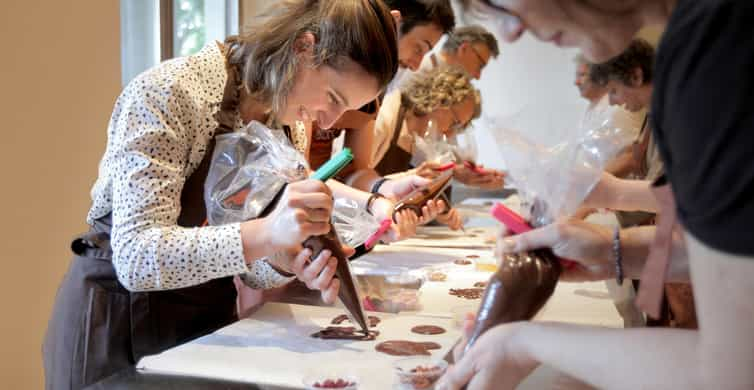
A 45-minute workshop: you make your own chocolates and small chocolate bars and take them home. It includes a museum visit with audio guide. Workshop in Italian, English or French.
According to the provider, from age 7; children aged 7 to 12 only with an adult holding a ticket.
from €39.00
See the workshop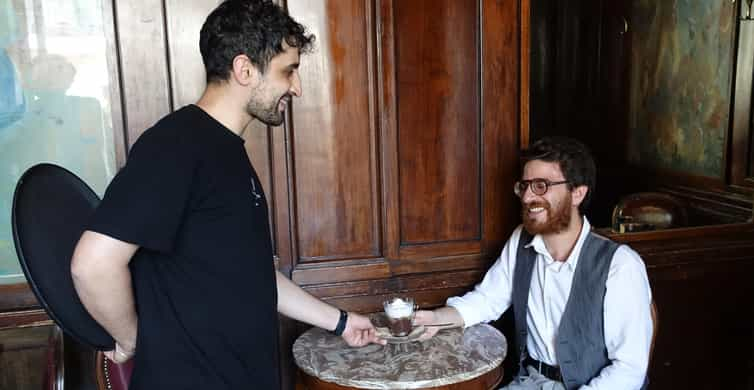
Starts with a Bicerin or Marocchino in a historic café, followed by a walk and a tasting of six chocolates, including gianduja and bean-to-bar chocolates, with a glass of Barolo Chinato. In English and Italian, maximum ten people.
Meeting point according to the provider: Caffè Elena, Piazza Vittorio Veneto 5/B.
from €43.00
See the chocolate class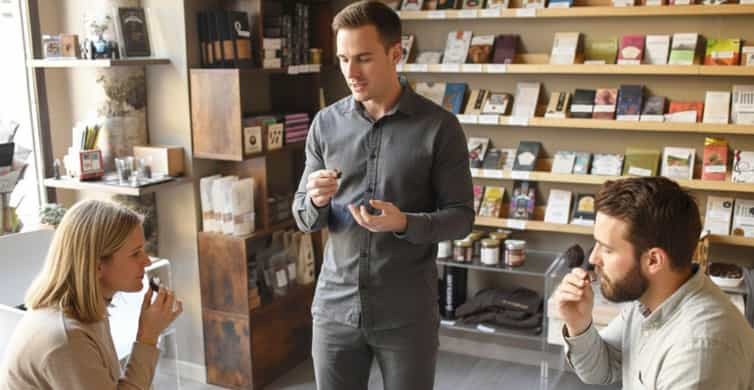
Guided tasting of Italian and international bean-to-bar chocolates in a small chocolate boutique. You learn how chocolate is made and how to taste it. In English, French and Italian, maximum eight people.
from €36.00
See the tasting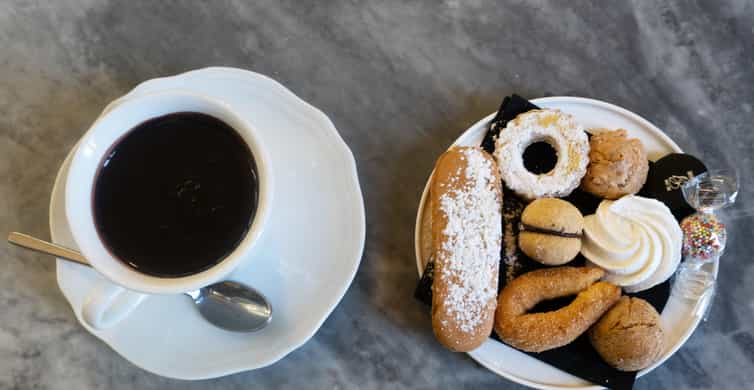
The royal afternoon snack at the Caffetteria Reale: hot chocolate from an 18th-century recipe, seven traditional pastries and two Turin chocolates. In Italian, English and French.
The café is on the left in the courtyard of the Royal Palace, accessed from Piazza Castello.
from €19.00
See the Merenda RealeAccording to the product pages, all four offers can be cancelled free of charge up to 24 hours in advance.
With a guide through the old town, from confectioner to café. The tours differ mainly in language, group size and duration.

Walk via Piazza Castello, the cathedral, the Porte Palatine and Palazzo Madama with a Gianduiotto tasting in a chocolate boutique. Offered in German, English, French, Italian, Spanish, Portuguese, Russian, Japanese and Chinese, also as a private tour.
Meeting point according to the provider: Piazza San Carlo by the monument. Free cancellation up to two days in advance according to the product page.
from €138.00
See the city tour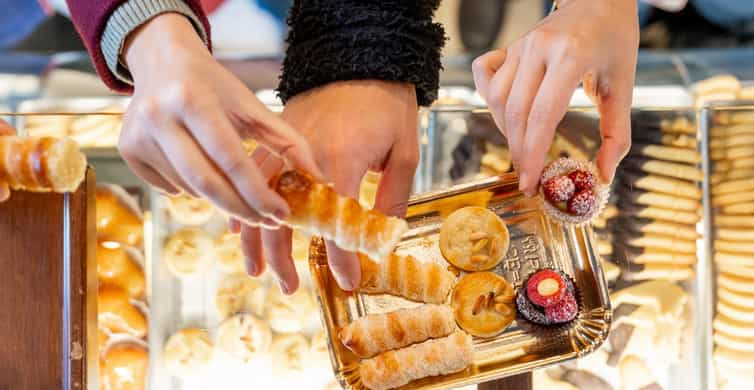
Through the Baroque centre to pastry shops and chocolatiers. At at least four stops you taste chocolate, pastries, Bicerin, cremini or Gianduiotti and gelato. In English and Italian, maximum twelve people.
Meeting point according to the provider: Piazza San Carlo, in front of the church of Santa Cristina.
from €69.00
See the chocolate tour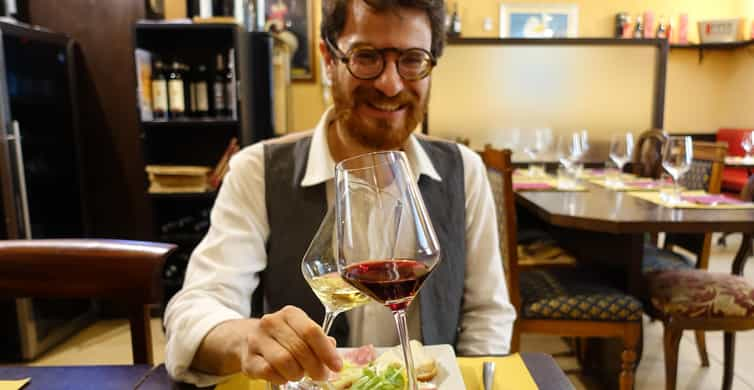
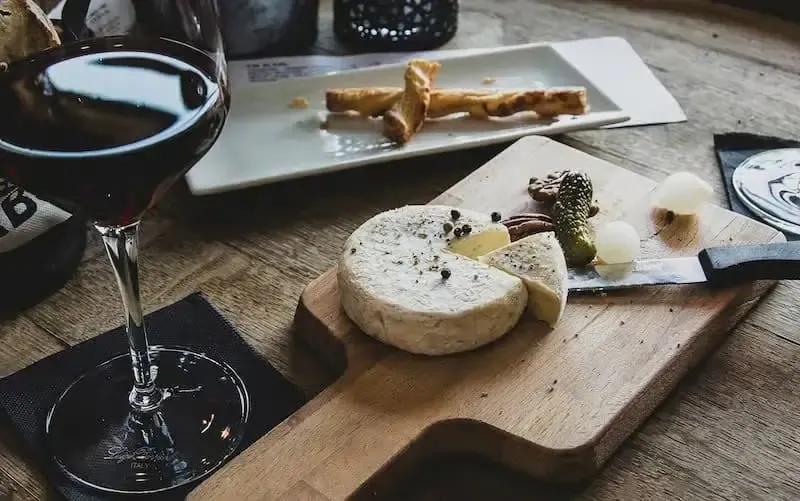
Six bean-to-bar chocolates, including Gianduiotto and Cremino, plus two regional wines and cured meats and cheese. In English and Italian.
Meeting point according to the provider: Caffè Elena, Piazza Vittorio Veneto 5/B.
from €69.00
See chocolate & wine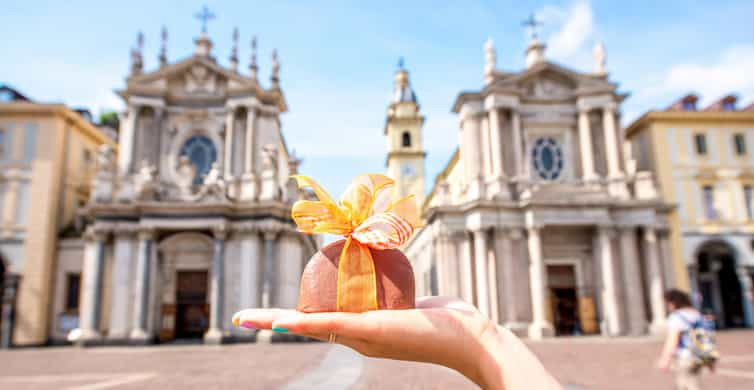
Private tour for families with various chocolates and a Bicerin or another hot drink; the guide tells the story of Turin's chocolate. In English and Italian.
Meeting point according to the provider: Piazza Carignano, in front of Palazzo Carignano.
from €175.00
See the family tourAccording to the product pages, the chocolate tour, the chocolate and wine tasting and the family tour can be cancelled free of charge up to 24 hours in advance.
An artisan chocolate maker at Strada Vivero 75b in Moncalieri, south of Turin: you see how roasted cocoa beans become Gianduiotti, then taste chocolates and gianduja spread. The guided tour lasts about an hour, in Italian or English. Both providers sell it, and there's parking on site.
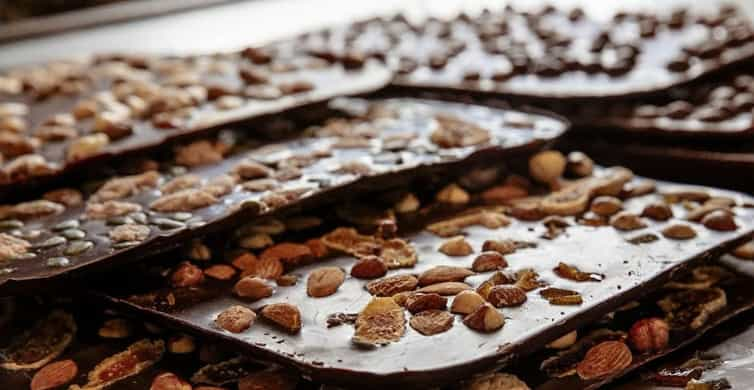
Guided tour of the workshop with a tasting of various chocolates and gianduja spread. Free cancellation up to 24 hours in advance according to the product page.
from €45.00
See on GetYourGuide
Guided tour with a tasting of Gianduiotto, single-origin chocolates and spread. Free cancellation and rebooking up to 24 hours in advance according to the product page; maximum 15 people.
from €45.00
See on TiqetsOnce a year, Piazza Vittorio Veneto turns into a chocolate market. At the CioccolaTò festival, chocolatiers, pastry chefs, gelato makers and liqueur producers exhibit at around 70 stalls, plus events in historic buildings across the city. It's organised by Turismo Torino e Provincia and supported by the Chamber of Commerce and the City of Turin.
The organiser publishes the programme and opening hours on cioccola.to.it.

According to Turismo Torino, the Torino + Piemonte Card gives you free admission to the Choco-Story museum and the Lavazza Museum – and to Turin's major museums, from the Egyptian Museum to the Musei Reali.

Vermouth, Piedmont wine, Aperitivo and street food: on our food tours page you'll find walks and tastings with savoury stops.
A hot drink from Turin made of coffee, chocolate and cream, served in layers in a small glass. "Bicerin" means "small glass" in Piedmontese. Since 2001 it has been officially recognised as a traditional drink of Piedmont.
The original is served at Caffè Al Bicerin on Piazza della Consolata 5, which gave the drink its name. Other historic cafés and several chocolate tours also serve Bicerin.
Since 1763. It was founded by Giuseppe Dentis opposite the Santuario della Consolata. The current building dates from 1856.
A chocolate shaped like an upturned boat, made from cocoa, sugar and Piedmontese Tonda Gentile hazelnuts. It was created in Turin in 1865, in the workshop of Prochet Gay e C. on Piazza San Carlo.
Gianduja is the paste made of chocolate and hazelnuts. The Gianduiotto is the boat-shaped chocolate made from it. The Cremino is a three-layered chocolate of gianduja chocolate and hazelnut cream, according to Turismo Torino an invention of Ferdinando Baratti.
The classics are Caffè Al Bicerin (1763), Caffè Fiorio (1780) on Via Po, Caffè San Carlo (1822), Baratti & Milano (1858) on Piazza Castello, Caffè Torino (1903) and the tiny Mulassano. Fiorio, Baratti & Milano, Mulassano and the cafés on Piazza San Carlo are close together.
Regular €12.00, reduced €10.00 (ages 12 to 26, 65 and over, students), children aged 3 to 11 €7.00. Children under 3 and Torino + Piemonte Card holders get in free.
Daily from 10:00 to 18:00. For a visit with audio guide and tasting, the providers reckon on one to one and a half hours.
Yes. The audio guide is included in the admission price and available in English, German, French, Italian and Spanish.
In 2026 the festival took place from 13 to 17 February on Piazza Vittorio Veneto. The next edition has been announced for 10 to 14 February 2027, with 10 February reserved for trade visitors.
Yes, all the chocolate tours on this page are offered in English and Italian; the city tour with chocolate tasting is available in nine languages. At the Choco-Story museum, the English audio guide helps you along.