
Skip to content

District on the Po

Borgo Po: Gran Madre, Monte dei Cappuccini and Villa della Regina

Opposite Piazza Vittorio Veneto, on the other side of the Po, the Turin hills begin. This is where you find the Gran Madre di Dio church, the Monte dei Cappuccini viewpoint with its mountain museum, and the Villa della Regina – all within walking distance.

  • Gran Madre di Dio: Pantheon-style church for the king's return, consecrated in 1831
  • Monte dei Cappuccini: views over Turin as far as the Alps
  • Museo della Montagna and Villa della Regina free with the Torino + Piemonte Card
  • Just across the bridge from Piazza Vittorio Veneto – tram 13 stops at the Gran Madre
Rated 4.9 out of 54.9
387 reviews
Book via GetYourGuide
Gran Madre di Dio from above with the square in front
Foto: Riccardo Zerbina / Pexels

Borgo Po: the residential district at the foot of the hill

Borgo Po stretches as a narrow strip along the right bank of the Po, from the area around Corso Casale in the north to the Monte dei Cappuccini in the south. Right behind it rises the collina, Turin's green hillside with its villas and gardens. Administratively, Borgo Po belongs to Circoscrizione 8, together with San Salvario, Cavoretto, Nizza Millefonti and Lingotto.

The borgo was once a small village outside the city, where fishermen and washerwomen made their living from the river. Today it is a quiet, sought-after residential district with period buildings and small shops. The main streets are Via Monferrato with its shops, Corso Moncalieri along the river to the south, and Corso Casale to the north towards Superga.

For visitors, Borgo Po is interesting mainly because of where it is. An old Turin city guide already described the view from Piazza Vittorio Veneto across the Napoleonic bridge over the Po: the Gran Madre in the middle, the Monte dei Cappuccini on one side and the Villa della Regina on the other. This page connects exactly these three places – plus the bridge that gets you there.

There are no big museums or shopping streets here. You come for the church, the view and the palace gardens, and in the evening for the view back over the illuminated city. On the other side of the river is Piazza Vittorio Veneto, one of the most popular spots for aperitivo.

Gran Madre di Dio: the church for the king's return

After Napoleon fell in 1814, the House of Savoy returned to Turin. King Vittorio Emanuele I entered the city once again. That same year, the city council decided to build a church in gratitude for the end of French rule. The inscription on the pediment still says so today: "Ordo populusque Taurinus ob adventum regis" – the nobility and people of Turin, for the arrival of the king.

In 1818, Vittorio Emanuele I laid the foundation stone himself. The design came from the architect Ferdinando Bonsignore. The church was consecrated on 20 May 1831.

  • Modelled on the Pantheon: the Gran Madre is a strictly neoclassical round building after the Pantheon in Rome – with a portico, a pediment and a shallow dome. It stands on a high base with a wide flight of steps.
  • The statues Fede and Religione: at the top of the steps sit two large figures: Faith (Fede) and Religion (Religione). Fede holds a chalice in her hand – this matters for the legend further down.
  • Interior: the interior is round, like the Pantheon. On the high altar stands a Madonna and Child by Andrea Galassi.
  • Ossuary: beneath the church lies the ossuary of those who fell in the First World War.

Visiting: the Gran Madre is a parish church at Piazza Gran Madre di Dio 4. According to Turismo Torino, it is open Monday to Saturday 8:00–19:00, with different hours on Sundays. Avoid sightseeing during services.

Façade of the Gran Madre di Dio church
Foto: Nikolai Kolosov / Pexels

The legend of the Holy Grail

Turin is known as a city of magic, and the Gran Madre plays a leading role in these stories. Italy's official tourism portal calls it "the most esoteric church in Turin", and Turismo Torino counts it among the city's esoteric places.

The best-known legend: the Holy Grail is said to be hidden somewhere between the statues Fede and Religione. Some read the chalice in Fede's hand, or the direction of her gaze, as a clue to the hiding place. There is no evidence for this – it is a legend, not history. But it is as much part of the Gran Madre's image as the columns and the dome.

Then there is the tale of Turin as a city of "white" and "black" magic. According to it, the city's "white soul" lies at Piazza Castello and its "black heart" at Piazza Statuto. More on this, and on the tours that tell these stories, can be found among our city tours in Turin.

Ponte Vittorio Emanuele I: the bridge from the French era

You reach the Gran Madre from Piazza Vittorio Veneto across the Ponte Vittorio Emanuele I. The stone bridge is older than the church: the French decided by imperial decree to replace the old bridge. The foundation stone was laid on 22 November 1810, and the new bridge was finished in 1813.

A year later the king returned. Today the bridge bears his name, and the Gran Madre was built at its end. Via Po, Piazza Vittorio Veneto, the bridge and the church thus form a straight axis from the old town to the hills.

Tip: stop on the bridge and look back. Behind Piazza Vittorio Veneto you can see the dome of the Mole Antonelliana. Upstream you can make out the Monte dei Cappuccini with its church. From 22 October 2026 to 10 January 2027, the bridge is part of Luci d’Artista: Joseph Kosuth's work "Doppio Passaggio (Torino)" lights up here, and Rebecca Horn's "Piccoli spiriti blu" on the Monte dei Cappuccini.

Monte dei Cappuccini: church, monastery and the view

South of the Gran Madre, a small wooded hill rises straight above the river: the Monte dei Cappuccini. Duke Carlo Emanuele I of Savoy gave the land to the Capuchin friars at the end of the 16th century, and they founded a monastery here. Hence the name.

Santa Maria al Monte: the monastery church was built to a design by Ascanio Vitozzi; construction began in 1584 and it was consecrated in 1656. It has the floor plan of a Greek cross and a dome on an octagonal drum. According to Turismo Torino, the church is open daily 9:00–19:00; the address is Piazzale Monte dei Cappuccini 3. Please do not visit during Mass (weekday evenings, and also mornings at weekends).

The viewing terrace: in front of the church is the piazzale with its balustrade – and the view most people come up here for. Below you lie the Po, the bridge and the Gran Madre, and beyond them the rooftops of the old town with the Mole Antonelliana. On a clear day you can see the Alps on the horizon. The square in front of the church is freely accessible.

Even a little higher, with an Alpine panorama, is the Vedetta Alpina on the roof of the mountain museum next door – more on that in a moment.

View over Turin towards the Alps
Foto: Pexels

Museo Nazionale della Montagna: mountain museum with Alpine views

The former Capuchin monastery next to the church houses the Museo Nazionale della Montagna "Duca degli Abruzzi". It was founded in 1874 by members of the Italian Alpine Club (CAI). Across two floors, it covers life in the mountains, mountaineering and mountain cultures around the world, with video installations, changing collections and temporary exhibitions.

The highlight for many visitors is the Vedetta Alpina, the viewing platform overlooking the city and the arc of the Alps. You can also visit it without the museum, with its own inexpensive ticket. The museum is open daily 10:00–18:00, and the ticket office closes an hour earlier. There are lifts and accessible toilets.

TicketOfficial admission
Museum, standard€10.00
Reduced: ages 11 to 18, over-70s, students under 25, groups of 15 or more€7.00
Panoramic terrace / Vedetta Alpina only€3.00
Children under 10, people with disabilitiesfree
With the Torino + Piemonte Cardfree

Official prices and opening hours according to Turismo Torino and Abbonamento Musei, as of October 2026. CAI members pay a reduced price. Current exhibitions: museomontagna.org.

Villa della Regina: a vineyard palace on the hillside

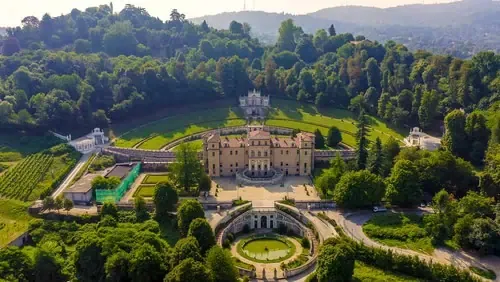
Above the Gran Madre, on the slope of the hill, lies the Villa della Regina. In the early 17th century, Prince Maurizio of Savoy had it laid out as a country residence modelled on Roman villas. At first it was called "Villa Lodovica" after Princess Ludovica. Later, duchesses, princesses and queens of the House of Savoy lived here – hence today's name, the "Queen's Villa". Under Anna d’Orléans, Filippo Juvarra remodelled the villa.

The villa was badly damaged by bombs in the Second World War. Restoration began in 1994, and it has been open to visitors again since 2006. It is part of the UNESCO World Heritage Site "Residences of the Royal House of Savoy".

  • Gardens: Italian terraced gardens with pavilions, fountains and grottoes, from which you look out over the city and the Alps.
  • Vineyard: the villa is the only hillside "vigna" in Turin preserved with all its original parts – main house, gardens, farm buildings and vineyard. The vines are being cultivated again today.
  • Rooms: inside, you can visit the historic rooms of the residence.

Opening hours: Tuesday to Sunday 9:30–18:00, closed on Mondays. The ticket office closes an hour earlier. The address is Strada Comunale Santa Margherita 79. On Sundays and public holidays you must book in advance (via museiitaliani.it), even with the Torino Card or Royal Pass.

Villa della Regina with its gardens on the Turin hillside

Villa della Regina: admission prices

TicketOfficial admission
Villa and gardens€10.00
Gardens only€5.00
Young adults aged 18 to 25€2.00
Under 18s, people with disabilitiesfree
With the Torino + Piemonte Card or Royal Passfree

Official prices according to the Ministry of Culture (cultura.gov.it) and Turismo Torino, as of October 2026. According to Turismo Torino, admission is free on the first Sunday of the month – booking is still required. Current information: cultura.gov.it.

With the Torino Card: mountain museum and villa free

With the Torino + Piemonte Card, admission to the Museo Nazionale della Montagna and the Villa della Regina is free. If you combine Borgo Po with the Egyptian Museum or the Mole, the card quickly pays for itself. Note: the 24-hour card covers a maximum of three museums for free.

More about the Torino Card
Torino + Piemonte Card

Villa della Regina with the Royal Pass

The Villa della Regina is one of the 16 residences included in the Royal Pass. If you are planning to see more Savoy palaces, such as La Venaria Reale, Stupinigi or the Musei Reali, the pass is worth it. The mountain museum is not included. Which pass suits you better is shown in our Torino Card vs Royal Pass comparison.

More about the Royal Pass
Turin Royal Pass

Walk: from Via Po up to the Monte dei Cappuccini

A half-day walk that follows on nicely from a visit to the city centre. Turismo Torino describes this route as part of a hiking trail from the Mole to the Monte dei Cappuccini. Time the climb so that you reach the top in the late afternoon.

  1. Under the arcades of Via Po

    Start at Piazza Castello. Walk under the arcades of Via Po towards the river. If you like, make a detour to the Mole Antonelliana via Via Montebello.

  2. Piazza Vittorio Veneto

    The wide square opens out towards the Po. From here the axis lies ahead of you: the bridge, the Gran Madre and the hills behind.

  3. Across the Ponte Vittorio Emanuele I

    Cross the stone bridge from 1813 to the other bank. Halfway across, look upstream towards the Monte dei Cappuccini.

  4. Gran Madre di Dio

    Climb the steps up to the statues Fede and Religione. Take a look inside the round interior if no service is taking place.

  5. Detour to the Villa della Regina

    If you have time, walk up the slope from the Gran Madre to the Villa della Regina. Allow enough time for the villa and gardens, and remember: closed on Mondays, booking required on Sundays.

  6. Along Corso Moncalieri

    Back at the Gran Madre, follow Corso Moncalieri south along the river to the foot of the Monte dei Cappuccini.

  7. Up to the piazzale

    The climb up the Monte dei Cappuccini is short. At the top, Santa Maria al Monte and the terrace with its view over the city await.

  8. Vedetta Alpina and sunset

    Before 17:00 you can still get into the mountain museum and onto the Vedetta Alpina. Afterwards, wait on the piazzale for the sun to set over the city. For aperitivo, head back down and across the bridge to Piazza Vittorio Veneto.

The best viewpoints – and when to go

The Monte dei Cappuccini lies east of the old town. So you look west across the city to the Alps – exactly where the sun sets in the evening.

Piazzale on the hill

The square in front of Santa Maria al Monte is freely accessible. It is at its best in the late afternoon and at sunset, when the light falls across the rooftops and the lights come on below. In winter it gets dark early, in summer late.
Vedetta Alpina

The mountain museum's platform is a little higher and opens up the view of the arc of the Alps. It follows the museum's opening hours (10:00–18:00). For clear long-distance views of the mountains, dry, cold days after rain or wind are ideal.

Ponte Vittorio Emanuele I

From the bridge you see the Gran Madre head-on and the Monte dei Cappuccini above the river. At the blue hour, when the church is lit up, this is where the classic photos are taken.

Basilica di Superga

Even higher and further out: the basilica on the Superga hill, reached by the historic rack railway from Sassi.

Go to the Superga page

Tours including the Gran Madre and Monte dei Cappuccini

We have not found a tour of Borgo Po alone with the big providers, nor any bookable tickets for the mountain museum or the Villa della Regina – you buy those on site. These tours link the city centre with the district or tell the legends surrounding the Gran Madre.

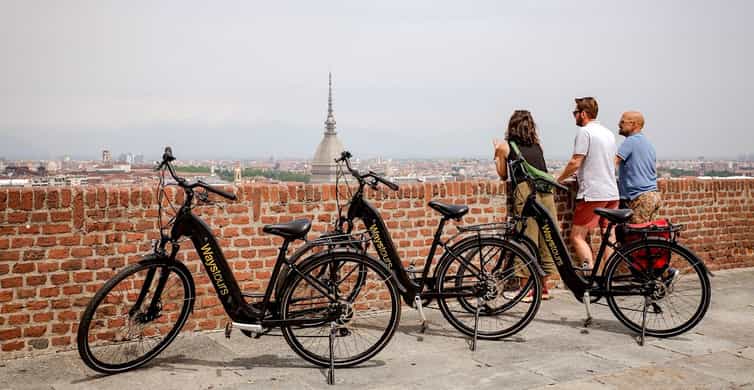
E-bike tour with viewpoint

E-bike tour with viewpoint

4.9 · 387 reviews

⏱ 3 hours🗣 English

Three-hour e-bike tour in a small group (max. 8 people) through the centre and up to the viewpoint at Piazzale Monte dei Cappuccini, finishing in the Valentino Park. The motor helps on the climb. Language: English. Minimum age 14 and minimum height 155 cm.

from €39.00

Details & booking
Electric bus with Po views

Electric bus with Po views

3.9 · 114 reviews

⏱ 50 minutes🗣 English, Chinese, French, German, Italian, Russian and others

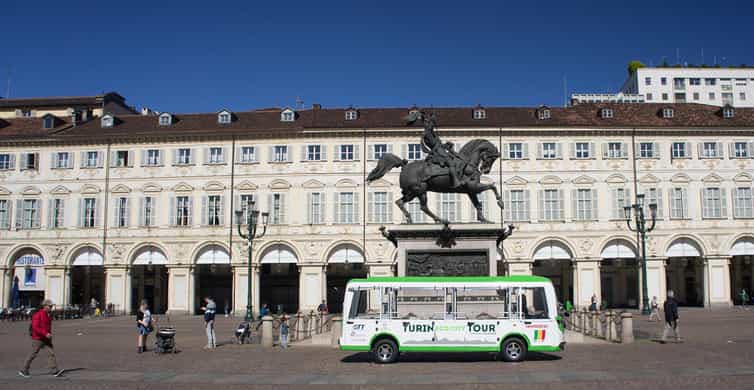
Around 50 minutes on the small electric bus of the Turin Eco City Tour from Piazza Castello, including through traffic-calmed areas. Along the way you see the Po with its bridges, the Gran Madre and the Mole. Audio guide in Chinese, German, English, French, Italian, Russian and Spanish. The ride is cancelled if it rains.

from €15.00

Details & booking
Torino Magica: the legends

Torino Magica: the legends

4.6 · 1,674 reviews

⏱ 2 hours – 2.5 hours🗣 English, Italian, French, German, Japanese, Spanish

The original tour of Turin's white and black magic, starting at Piazza Statuto. A stop at the Gran Madre is not mentioned in the description – the tour tells the background to the legends. Groups in Italian and English; German, French, Spanish and Japanese only as a private tour.

from €55.00

Details & booking

According to the providers, all three tours can be cancelled free of charge up to 24 hours in advance. You can find more walks among our city tours in Turin.

Getting to Borgo Po

  • On foot: from Piazza Castello it is only a few minutes along Via Po and across the bridge to the Gran Madre. This is the nicest way to get there.
  • Tram: tram line 13 runs from Piazza Campanella through the city centre and terminates at Piazza Gran Madre di Dio.
  • On to Superga: Corso Casale takes you north to Sassi. That is where the rack railway to the Basilica di Superga starts; from the city centre, tram 15 and buses 61 and 68 go to Sassi.

Tickets, Tap&Go and day tickets are explained on our page about public transport in Turin. You can find more places to visit in the city among the sights and in our itineraries for two days in Turin.

Borgo Po, Gran Madre and Monte dei Cappuccini: frequently asked questions

Back to top