Casa Maffei
Corso Montevecchio 50. Designed by Antonio Vandone di Cortemiglia, dated 1904. Listed in the inventory as a building of historic and artistic value, and cited by the Regione Piemonte as an example of Turin Liberty.

City district
South-west of Porta Nuova station lies the Crocetta: wide avenues, villas and apartment buildings from around 1900, what Turismo Torino calls the city's most stylish market, and the Politecnico. A district for looking and strolling, not for ticking off sights.
from€10.00per person
Book a GAM ticket
The Crocetta lies south-west of Porta Nuova station. To the north it reaches Corso Vittorio Emanuele II, to the east the railway tracks form the boundary, with San Salvario beyond them. To the south and west the district stretches as far as Corso Castelfidardo and Corso Mediterraneo.
Administratively, the Crocetta belongs to Circoscrizione 1 "Centro – Crocetta", the same district as the city centre. Turismo Torino calls it one of the most stylish areas of the city and also a hub for the university and innovation, with Art Nouveau buildings along its avenues.
The oldest part, in the north near Corso Vittorio Emanuele II, is Borgo San Secondo with the church of San Secondo from 1867. The heart of the Crocetta, with the market on Largo Cassini and the parish church, lies further south.
The main routes for visitors:
There are no major sights here like in the old town. The Crocetta is worth it for a walk past the façades, a morning at the market and as a contrast to the sights of the city centre.
The district takes its name from the church "alla Crocetta". According to a 19th-century Turin city guide digitised by MuseoTorino, Maddalena Gropella da Soncino had a chapel built in 1588 in honour of the Madonna delle Grazie. In 1617 Duke Carlo Emanuele I handed it over to the Trinitarians, and in the same year Cardinal Maurizio di Savoia laid the foundation stone for the church. The Trinitarians moved in in 1621, and the church became a parish in 1728. Back then the place lay outside the city: the same guide describes how you could get from the end of Corso Principe Umberto to the Borgo della Crocetta "in a few minutes".
Until the end of the 18th century the area was farmland. In the 19th century Borgo San Secondo grew up along Corso Vittorio Emanuele II with a regular street grid. Between 1875 and 1900 the blocks between Corso Vittorio Emanuele II, Corso Re Umberto, Corso Stati Uniti and Corso Duca degli Abruzzi were developed with villas according to plan.
The decisive boost came in the 20th century. The Piazza d’Armi, the parade ground, was moved in 1904. On the land it freed up, a new district with round squares and diagonal streets was built following the development plan by Giovanni Chevalley, approved in 1912. Upmarket apartment buildings went up, and between Corso Montevecchio, Corso Galileo Ferraris, Corso Trento, Corso Arimondi and Corso Duca degli Abruzzi a planned villa quarter was laid out, its plots divided up in the 1920s.
Today's parish church, the Beata Vergine delle Grazie at Via Marco Polo 8, was built in 1887 to designs by Ferrari d’Orsara in neo-medieval style. Locals simply call it "la Crocetta".
The Crocetta was never quite as bourgeois as it looks today. On Via Pigafetta stand workers' houses built in 1889 by the vermouth producer Martini & Rossi, and cooperative housing by Pietro Fenoglio from 1903 to 1909 – more on these in the section on the Liberty buildings.
"Liberty" is the Italian name for Art Nouveau. Around 1900 Turin was one of its centres. The Regione Piemonte cites as examples Palazzo Maffei at Corso Montevecchio 50 and several houses on Corso Galileo Ferraris and Corso Re Umberto, recognisable by their wrought iron, stained-glass windows and floral motifs.
The following buildings are listed in the 1984 inventory "Beni Culturali Ambientali nel Comune di Torino", which MuseoTorino makes available online. Address, architect and year come from there. Almost all are privately owned residential buildings: you can only see them from outside, so please don't walk into entrances or gardens.
Listed roughly in the order of our walk further down. Year of construction according to the 1984 inventory.
Corso Montevecchio 50. Designed by Antonio Vandone di Cortemiglia, dated 1904. Listed in the inventory as a building of historic and artistic value, and cited by the Regione Piemonte as an example of Turin Liberty.
Corso Montevecchio / Corso Trieste / Corso Galileo Ferraris. Work of the sculptor Luigi Contratti from 1903, described in the inventory as his masterpiece. It honours the physicist and engineer Galileo Ferraris, after whom the avenue is also named.
Corso Galileo Ferraris 70, corner of Corso Trento. Built in 1916 by Giuseppe Momo. One of the villas that shape the look of the avenue.
Corso Galileo Ferraris 78, corner of Corso Einaudi. Michele Frapolli, 1905. According to the inventory, typical of the floral style of the early 20th century.
Corso Galileo Ferraris / Corso Einaudi / Via Vico. Not Liberty but older: the residential part of an 18th-century farm estate – a remnant of the time when there were still fields here.
Via Vico 2. Pietro Betta, 1912. The inventory calls it an important example of Liberty in the style of Josef Hoffmann, which means more geometric and austere than the floral houses.
Apartment building by Michele Frapolli from 1911, according to the inventory a typical example of geometric Liberty with eclectic touches. Very close to the market.
Apartment building by E. Ballatore di Rosana, 1911, also in "Hoffmann Liberty" style.
Via Da Verrazzano / Via Dego. Municipal public baths, designed after 1908 by the city architect Dolza. Liberty for everyone: a functional building with an Art Nouveau façade.
Via Polo 35 and 37, Via Pigafetta 6 and 12. Cooperative housing by Pietro Fenoglio, 1903 to 1909. Fenoglio is Turin's best-known Liberty architect.
Via Pigafetta 44–48, Via Da Verrazzano 41 and 43. Workers' houses by Camillo Riccio from 1889 – not Liberty, but part of the history of Turin vermouth.
Corner of Corso Sommeiller / Via Governolo. Apartment building from 1911, according to the inventory an important example of the floral style of the early 20th century. On the eastern edge of the Crocetta, near the tracks.
If you are coming to Turin specifically for Art Nouveau, note this: the best-known buildings, such as the Casa Fenoglio-La Fleur at Via Principi d’Acaja 11 from 1902, which the inventory calls Fenoglio's masterpiece, are not in the Crocetta but in the Cit Turin district north-west of Porta Susa. The Crocetta is the quieter counterpart: fewer showpiece façades, but whole streets from around 1900. There are guided Liberty walks in Cit Turin; you will find one of them below.
The Mercato della Crocetta is the reason many Turin locals come to the Crocetta at all. The stalls run from Largo Cassini along Via Marco Polo to Vicolo Crocetta and along Corso De Gasperi. Turismo Torino calls it the most stylish market in the city.
According to the City of Turin, the market has around a century of history. It is known for clothing, shoes and accessories, and the city describes the surrounding area as a true fashion district. There is also food and costume jewellery.
Good to know:
At Largo Cassini 7, by the way, stands the former Convalescenziario Crocetta from 1880, a home for convalescents. The small square itself, with its houses, is listed in the 1984 inventory as an ensemble of value.
If you love markets, you'll find the big counterpart in the old town: the Porta Palazzo market, according to the City of Turin the largest open-air market in Europe.
Politecnico di Torino. The technical university has its roots in the Scuola di Applicazione per gli Ingegneri of 1859 and has existed as the Regio Politecnico since 1906. For a long time it was based in the Castello del Valentino in San Salvario, which it still owns. In November 1958 the large complex at Corso Duca degli Abruzzi 24 opened, designed by Giovanni Muzio and Cesare Bairati. Since then students have shaped the district; later came the expansion into the "Cittadella Politecnica". The site is a university campus, not a museum.
According to Turismo Torino, opposite the Politecnico are the Giardini del Fante, whose wisteria blooms purple in spring. On Corso Mediterraneo stands the Igloo fountain by Mario Merz: an igloo shape made of stone slabs with neon light marking the points of the compass.
GAM – Galleria Civica d’Arte Moderna e Contemporanea. On the northern edge of the district, at Via Magenta 31 on the corner of Corso Galileo Ferraris, the GAM shows painting, sculpture, photography and video art from the 19th century to the present. Turin was the first city in Italy with a public collection of modern art. The museum building from the 1950s is based on a competition design by Goffredo Bassi and Carlo Boschetti.
You'll find more museums in our overview of museums in Turin. If you're out and about on a Monday, the list of museums open on Mondays will help. Turismo Torino also counts the OGR as part of this area: the former railway repair workshops, now a centre for culture and innovation.
Both districts border Porta Nuova station, separated only by the tracks. Yet they feel completely different.
| Crocetta | San Salvario | |
|---|---|---|
| Location | west of the tracks, south-west of Porta Nuova | east of the tracks, between Porta Nuova and the Po |
| District | Circoscrizione 1 (Centro – Crocetta) | Circoscrizione 8 |
| Character | quiet, upmarket residential area with avenues and villas | dense area of old buildings, multicultural, busy in the evening |
| Architecture | Liberty houses and villas from around 1900, plans from 1912 | 19th-century apartment buildings, synagogue, Waldensian church |
| By day | Mercato della Crocetta, GAM, a walk | Parco del Valentino, Castello, Botanical Garden |
| In the evening | rather quiet | Aperitivo and nightlife around Largo Saluzzo |
Our tip: in the morning, the market and Liberty houses in the Crocetta; in the afternoon, cross via Porta Nuova to the Valentino park; and in the evening, head to San Salvario for an Aperitivo.
A route for one morning, ideally on a weekday or Saturday when the market is on. If you plan to visit the GAM, remember that it is closed on Mondays.
From Porta Nuova station, take the west side into Via Sacchi. Between Via Magenta and Corso Sommeiller you'll pass residential and commercial buildings from the late 19th and early 20th centuries.
Via Magenta takes you to the GAM on the corner of Corso Galileo Ferraris. If you want to go into the museum, now is the time.
Follow the avenue south to the Galileo Ferraris monument from 1903. At Corso Montevecchio 50 stands the Casa Maffei.
Continue along Corso Galileo Ferraris: no. 70 is the Villa Frassati from 1916, and no. 78, on the corner of Corso Einaudi, the Casa Gamna from 1905.
On Via Vico you'll see the remains of the Villa Rignon and, at no. 2, the Casa Avezzano. From there it isn't far to Via Cassini 21.
On Largo Cassini and along Corso De Gasperi you are right in the middle of the market. Next to it, at Via Marco Polo 8, stands the church of Beata Vergine delle Grazie from 1887.
If you want to keep walking, head to Fenoglio's cooperative housing on Via Polo and Via Pigafetta and to the Martini-&-Rossi houses further along Via Pigafetta.
Finally you reach the Politecnico on Corso Duca degli Abruzzi. To get back to the centre, take a bus or tram or walk to the metro on Corso Vittorio Emanuele II.
We didn't find a guided tour of the Crocetta alone with the major providers. You don't need one for the district either: the houses can be seen from the street. Worthwhile are the GAM ticket and, if you love Art Nouveau, a Liberty walk in Cit Turin.
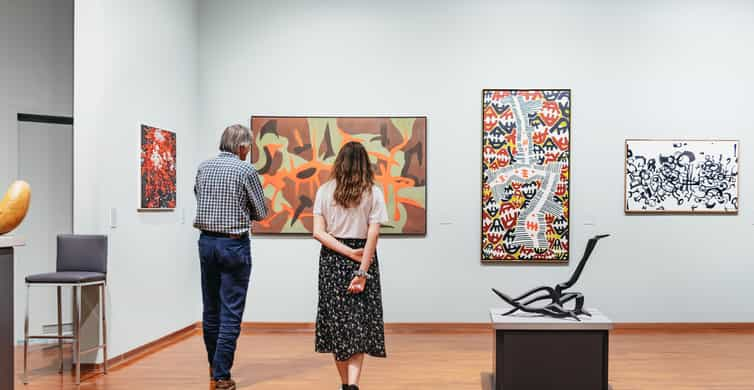
Official ticket from the Fondazione Torino Musei for the Gallery of Modern Art at Via Magenta 31, valid for one day, including temporary exhibitions. Closed on Mondays.
from €10.00
Details & booking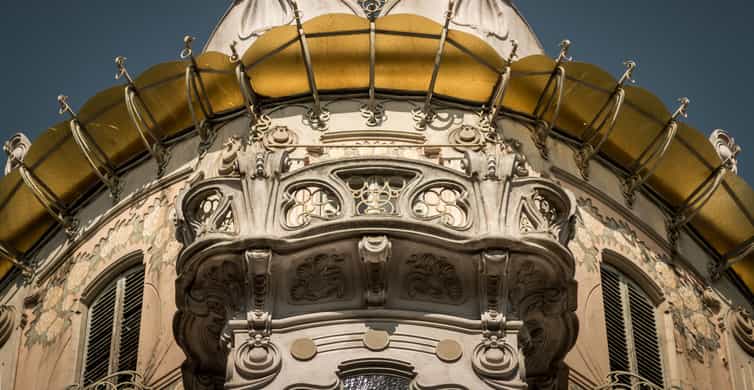
Two-hour walk through Turin's Art Nouveau, including the Casa Fenoglio-La Fleur and the Villino Raby in Cit Turin, with a coffee break in a traditional café. Meeting point at the Principi d’Acaja metro station. Languages: English, Spanish, Italian, French.
from €79.00
Details & bookingAccording to the providers, both offers can be cancelled free of charge up to 24 hours in advance. You'll find more guided walks among our city tours in Turin.
All tickets and fares for buses, trams and the metro are on our page on public transport in Turin. You can read more about Porta Nuova and Porta Susa on our page about train stations in Turin.
The district itself costs nothing: streets, market and façades are free. With the Torino + Piemonte Card, admission to the GAM is free; otherwise you pay the regular €10. The card pays off if you visit more museums in the city centre on the same day. The Royal Pass does not include the GAM – it is designed for the residences of the House of Savoy. Our Torino Card vs Royal Pass comparison shows which card suits you.
South-west of Porta Nuova station, west of the railway tracks and south of Corso Vittorio Emanuele II. The district belongs to Circoscrizione 1 "Centro – Crocetta".
From the church "alla Crocetta". It dates back to a chapel from 1588; in 1617 the foundation stone was laid for the church, which the Trinitarians looked after. Today's parish church, Beata Vergine delle Grazie on Via Marco Polo, dates from 1887.
Above all on Corso Galileo Ferraris (Villa Frassati at no. 70, Casa Gamna at no. 78), at Corso Montevecchio 50 (Casa Maffei), at Via Vico 2 (Casa Avezzano) and at Via Cassini 21. They are private houses that you can only see from outside.
Turin's markets run from Monday to Saturday, not on Sundays. The city does not publish fixed hours for the Crocetta on its website; current information is in the Torino Mercati app. It's best to go in the morning.
The market is known for clothing, shoes and accessories, and there is also food and costume jewellery. It is on Largo Cassini, Via Marco Polo, Vicolo Crocetta and Corso De Gasperi.
Both are next to Porta Nuova station, but on different sides of the tracks. The Crocetta is a quiet, upmarket residential area with villas and Liberty houses. San Salvario is denser, multicultural and one of Turin's nightlife districts in the evening.
The site at Corso Duca degli Abruzzi 24 is a university campus, not a museum; you can see the façade and its surroundings from the street. The building by Giovanni Muzio and Cesare Bairati opened in November 1958.
Tuesday to Sunday from 10:00 to 18:00, ticket office closes at 17:00, closed on Mondays. Official admission costs €10, reduced €8, and it is free for under-18s. With the Torino + Piemonte Card you pay nothing.
From Porta Nuova station on foot, or by metro to Re Umberto on Corso Vittorio Emanuele II. For the market and the south of the district, take a bus or tram from there or walk a little further.