Fruit and vegetables
The largest part of the square. Hundreds of stalls line up in the open air. More than a third of all street stalls sell fruit and vegetables.

Europe's largest open-air market
Around 800 mobile stalls, a farmers' market under historic roofs, a fish hall from 1836 and the Balôn flea market on Saturdays: Turin has been shopping at Porta Palazzo for almost 200 years.

The market at Porta Palazzo fills Piazza della Repubblica, Turin's largest square. The City of Turin calls it the largest open-air market in Europe. Locals often just say "Porta Pila".
More than a third of the street stalls sell fruit and vegetables. Then there is cheese, cured meats, fish and sweets, but also clothing, shoes, fabrics and household goods. The traders come from many regions of Italy and from many countries. So alongside Piedmontese produce you'll also find specialities from southern Italy, Eastern Europe and other parts of the world.
Porta Palazzo is an everyday market, not a show market. This is where people in Turin buy their vegetables for the week – and that's exactly what makes a visit so interesting.

The market is made up of open-air street stalls and several covered halls. Each part has its own character.
The largest part of the square. Hundreds of stalls line up in the open air. More than a third of all street stalls sell fruit and vegetables.
Under the Tettoia dei Contadini, farmers sell their own produce. The hall has recently been fully restored. It represents the origin of the market: producers bringing their goods straight into the city.
The Mercato Ittico is one of the oldest buildings of the market: the halls for fish and food were built in 1836. This is where you buy fresh fish and seafood.
The Tettoia dell’Orologio, the hall with the clock, was built in 1916 as Pavilion IV. Under its iron roof are strictly numbered food stalls – a covered part of the market, good when it rains.
Many of the stalls don't sell food: clothing, shoes, fabrics, pots and household goods. The focus is on cheap everyday items rather than souvenirs.
The modern glass building by Massimiliano Fuksas has housed the Mercato Centrale since 2019: around 4,500 square metres on three floors with 23 artisan food businesses, a restaurant, cookery school, café and beer bar. It is open daily, including evenings and Sundays.
The food market on Piazza della Repubblica runs from Monday to Saturday. The city doesn't publish fixed times for all stalls on its website. For details, the city and Turismo Torino refer to the municipal app "Torino Mercati". It's best to plan your visit for the morning.
| Market | Days | Times |
|---|---|---|
| Porta Palazzo food and street market | Monday to Saturday | see the "Torino Mercati" app |
| Balôn (flea market, Borgo Dora) | every Saturday | 7:00–18:00 |
| Gran Balôn (antiques, Borgo Dora) | second Sunday of the month | 8:00–18:00 |
| Mercato Centrale | Monday | 8:00–19:00 |
| Mercato Centrale | Tuesday to Thursday, Sunday | 8:00–22:30 |
| Mercato Centrale | Friday / Saturday | 8:00–23:30 / 8:00–midnight |
Times for Balôn and Gran Balôn according to Turismo Torino, for the Mercato Centrale according to mercatocentrale.com, as of October 2026. Times may differ on public holidays.
Right behind the market begins Borgo Dora, an old district of narrow lanes between Piazza della Repubblica and the River Dora. This is where the Balôn takes place, Turin's best-known flea market.
According to the City of Turin, the name comes from a former ball court (sferisterio) in the district. The Piedmont region gives a second possible origin: a valley ("valon") that sloped down towards the Dora. According to the Piedmont region, the market in Borgo Dora dates back to the late 17th century, when livestock and farm goods were traded here.
Tip: if you're in Turin on a Saturday, combine Porta Palazzo and the Balôn – the food market in the morning, then a stroll through the lanes of Borgo Dora. Current dates and special editions are listed on turismotorino.org.

The name recalls a city gate: the Porta di Palazzo was inaugurated in 1701 and was the northern entrance to the city. After the city walls were demolished on Napoleon's orders around 1800, a new square grew up here.
Beneath the square lie the old ice cellars (Antiche Ghiacciaie). This is where the ice the traders used to keep their food cool was once stored. Today the rooms are used for events.
One artwork has become part of the square: Michelangelo Pistoletto's light installation "Amare le differenze" (2005) shows the words "love the differences" in 39 languages – fitting for a market with traders from so many countries. In winter it is part of the Luci d’Artista light art festival; find out more on our page about Christmas in Turin.
The market is on the northern edge of the old town, on Piazza della Repubblica.
Tickets and fares are on our page about public transport in Turin.
The market is best explored on your own – there's no admission fee. If you want to combine Porta Palazzo with a culinary experience, the booking platforms currently have hardly any tour that explicitly includes this market. These options still fit the theme well:
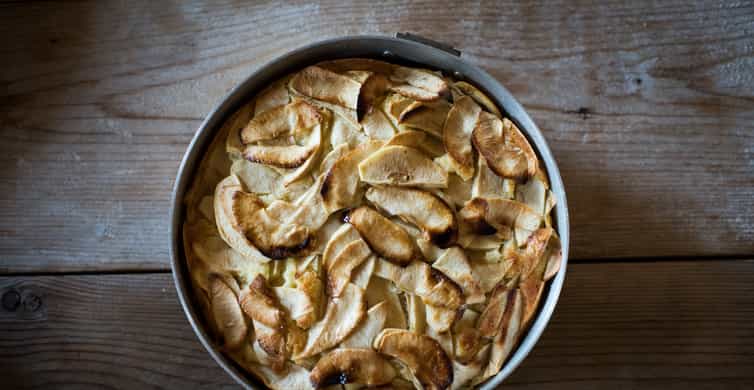
You go to a market in Turin with a Cesarine host. Afterwards she prepares a dish at her home in front of you – a demonstration, not a hands-on class. Then comes a 4-course menu with wine, water and coffee. The description doesn't say which market is visited. Private, duration 4 hours. Languages: English, Italian.
from €139.00
Details & booking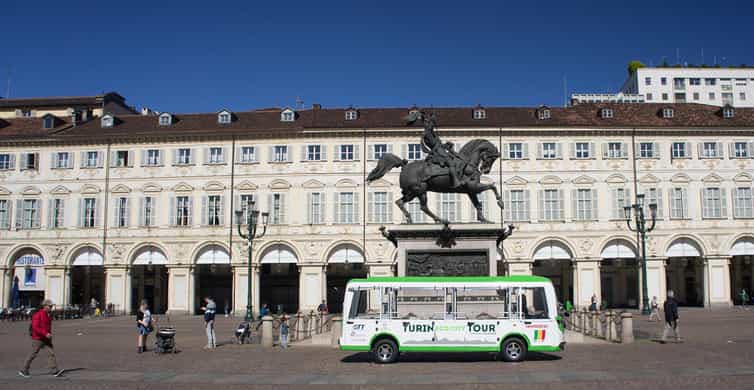
A city tour on the green electric bus from Piazza Castello, passing the cathedral, the Palazzo Reale and Piazza della Repubblica with the market, among other sights. Duration 50 minutes. Audio guide in English, Italian, German, Spanish, French, Russian and Chinese.
from €15.00
Details & booking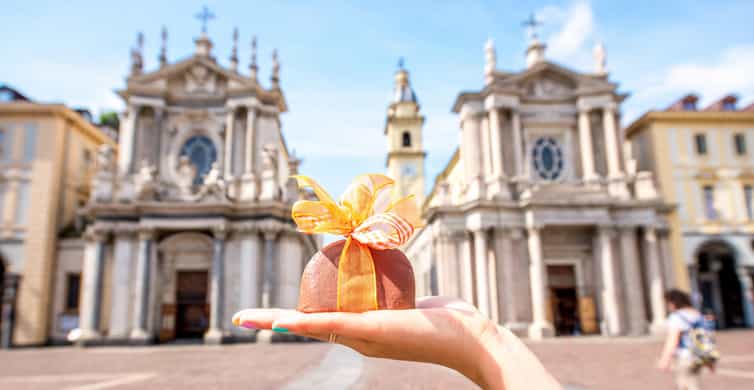
Not a market tour, but a good complement: tastings of gianduiotto, chocolates, gelato, zabaione and Bicerin or vermouth in the city centre. Duration 2 hours. Languages: English, Italian.
from €39.00
Details & bookingAccording to the providers, all three options can be cancelled free of charge up to 24 hours in advance.
Fancy making your own pasta after a stroll round the market? On our cooking classes page you'll find classes for fresh pasta, tajarin and tiramisu with locals in Turin – plus a full market and cooking day in Alba.
Porta Palazzo is on the edge of the old town. These places combine well with a visit to the market.
The district with the Roman street grid starts right next to the market: small shops, osterias and bars for aperitivo.
Caffè Al Bicerin on Piazza della Consolata has been serving Turin's layered drink of coffee, chocolate and milk cream since 1763.
The Royal Palace of the House of Savoy, with its armoury and gardens, lies between the market and Piazza Castello. Entry is free with the Torino + Piemonte Card.
Chocolate, wine, vermouth and street food: all guided tasting tours in Turin at a glance.
From Monday to Saturday. Saturday is the biggest market day, with extra stalls. There is no food market on Piazza della Repubblica on Sundays.
The City of Turin doesn't publish fixed times for all stalls on its website; details are in the municipal app "Torino Mercati". It's best to plan your visit for the morning.
The City of Turin and Turismo Torino describe it as the largest open-air market in Europe. The square measures 51,300 square metres and holds around 800 mobile stalls run by more than 1,000 traders.
The Balôn takes place every Saturday from 7:00 to 18:00 in Borgo Dora, right behind the market. The larger Gran Balôn with antiques and collectables is held on the second Sunday of every month from 8:00 to 18:00.
The easiest way is tram 4 from Porta Nuova station towards Via delle Querce to the "Porta Palazzo Nord" stop. On foot it takes around 25 minutes from either Porta Nuova or Porta Susa.
Mainly fruit and vegetables, plus fish, cured meats, cheese, sweets and specialities from many countries. There are also stalls with clothing, shoes, fabrics and household goods. At the farmers' market, farmers sell their own produce.
The market is an ordinary place for people in Turin to do their shopping. As in any crowd, watch out for pickpockets: carry valuables at the front and don't keep your phone in your back pocket.
A tour that explicitly covers Porta Palazzo is hard to find on the big booking platforms at the moment. The market visit with a meal at a Cesarina's home takes you to a market in Turin. The market itself is easy to explore on your own – entry is free.
A market hall with 23 artisan food businesses, a restaurant, cookery school and café in the modern glass building on Piazza della Repubblica, opened in 2019. Unlike the street market, it is open every day and into the evening.
From the Porta di Palazzo, a city gate in the north of Turin inaugurated in 1701. The square has only been called Piazza della Repubblica since 1946.